
TL;DR:
- Home renovations involving lead paint or structural demolition require strict safety protocols to protect children from hidden hazards. Contractors must have EPA Lead-Safe certification, establish sealed containment zones, ensure continuous HEPA filtration, and enforce daily cleaning routines. Children should be kept out of work areas, with designated safe zones and planned move-outs during major hazardous work.
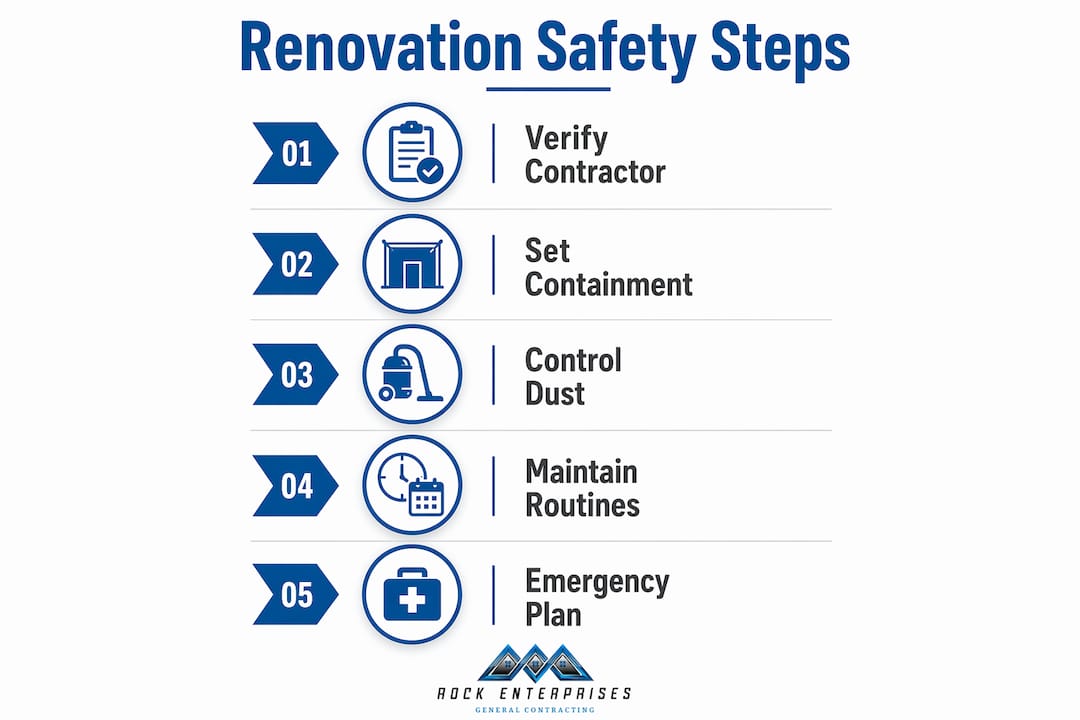
If your renovation will disturb painted surfaces in a home built before 1978, or involve any structural demolition, keep children out of the work area entirely. Require EPA Lead-Safe certification from your contractor, full floor-to-ceiling containment, continuous HEPA filtration in sleeping rooms, and daily wet-cleaning before kids re-enter any space near the work zone.
Three things to do before work starts:
- Verify EPA Lead-Safe certification. Ask for the contractor’s certificate number and confirm it on the EPA’s online registry before signing anything.
- Set up a child-safe zone. Pick one bedroom and bathroom that will stay completely untouched until the project is done. That room is off-limits to contractors and dust.
- Require end-of-day lockup. Every tool, chemical, and fastener goes into a steel, lockable contractor box before your family comes home.
Quick stay-vs.-move-out guide:
- Stay (with precautions): Single-room cosmetic work, low-VOC painting in a well-ventilated space, tile replacement with no lead-paint disturbance
- Move out: Confirmed lead or asbestos abatement, full gut demo, loss of the only bathroom or kitchen, children with asthma or allergies, pregnancy
Pro Tip: Ask your contractor for their EPA RRP (Renovation, Repair, and Painting) certificate number on day one. A contractor who hesitates to provide it is a red flag before a single wall comes down.
Table of Contents
- What hazards actually threaten your kids during a renovation
- How to set up a containment zone your kids cannot breach
- How to protect your indoor air and clean hazardous dust
- When should you temporarily move out?
- What to require from your contractor before work begins
- How to keep kids’ routines intact during a renovation
- Your renovation safety checklist and emergency plan
- How Rockenterprisecontracting approaches safe, family-focused renovations
- Key Takeaways
- The safety detail most contractors skip
- Rockenterprisecontracting: safety-first renovations for families in NJ
- Useful sources
- FAQ
What hazards actually threaten your kids during a renovation
The real danger in renovations is usually invisible. Lead dust, mold spores, and VOC fumes do more damage to developing bodies than an open staircase does, yet most parents focus on the obvious physical risks. Here is the full picture:
Invisible hazards:
- Lead dust. Homes built before 1978 likely contain lead-based paint. Sanding, cutting, or demolishing those surfaces releases fine dust that settles on floors, toys, and hands. There is no known safe blood lead level in children — even very low exposures affect IQ and learning.
- Asbestos. Vinyl flooring, ceiling tiles, and textured “popcorn” ceilings installed before the mid-1980s may contain asbestos fibers. Once airborne, they require certified professional removal.
- VOCs. Paint, adhesives, caulk, and new cabinetry off-gas volatile organic compounds. The EPA classifies VOCs as indoor air pollutants with short- and long-term health effects.
- Mold. Opening walls in wet areas can release mold spores throughout the house within minutes.
- Construction dust (PM2.5). Fine particulate from drywall, concrete, and wood penetrates deep into lungs.
Physical hazards:
- Unsecured power tools and nail guns
- Loose fasteners and screws on floors
- Extension cords across walking paths
- Open stairwells and unguarded floor openings
- Unlabeled or improperly stored chemicals
Who is most at risk: Infants and toddlers are highest-risk because they crawl on contaminated floors and put hands in mouths constantly. Children with asthma or allergies react faster to dust and VOC spikes. Pregnant people face fetal exposure risks from lead and solvent fumes. For all three groups, the containment and air-quality standards below are not optional.
How to set up a containment zone your kids cannot breach
Good containment is the difference between a renovation that stays in one room and one that spreads dust through your entire house. Follow this sequence before any demolition begins.
- Map the work zone precisely. Walk the space with your contractor and mark every boundary with tape on the floor. Agree on which doors, hallways, and vents are inside the zone.
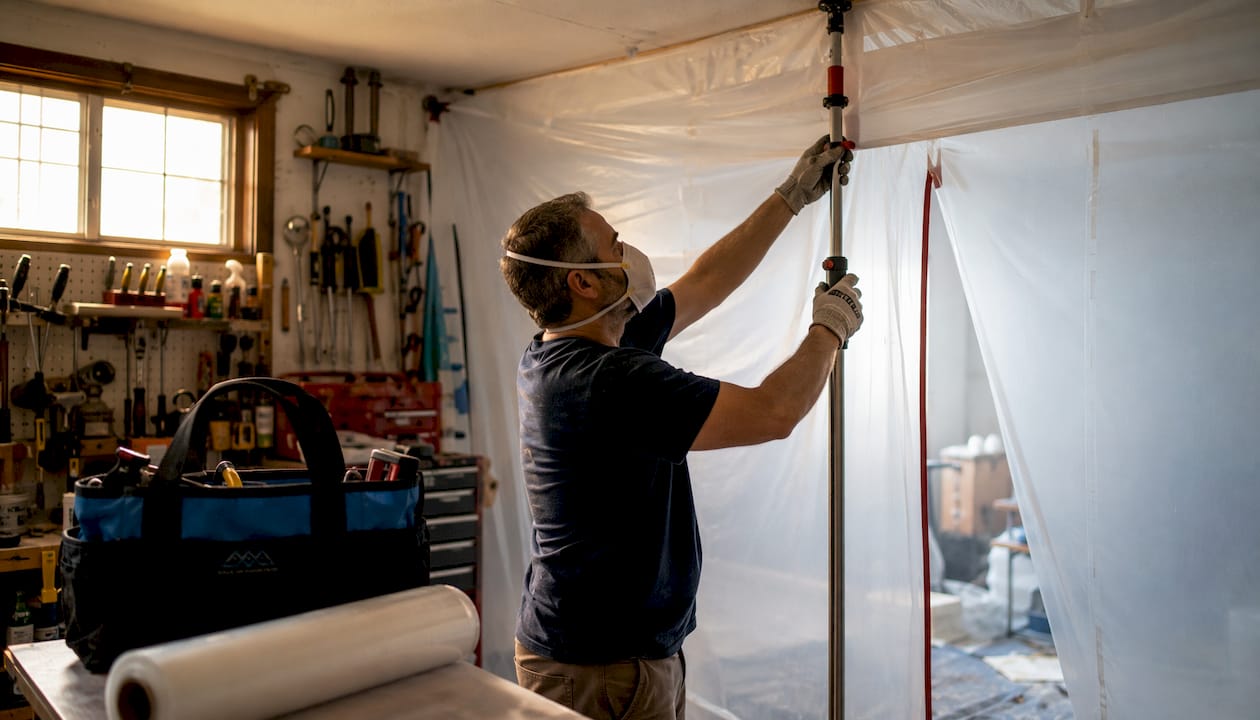
- Seal HVAC vents and returns. Cover every vent inside the work zone with 6-mil polyethylene and tape the edges. This prevents the HVAC system from pulling dust into the rest of the house.
- Build floor-to-ceiling barriers. Use contractor-grade temporary wall systems rather than painter’s tape and lightweight plastic. Professional spring-loaded pole systems resist child breaches and dramatically reduce dust bypass compared to taped sheeting.
- Create an airlock entry. Hang a second layer of plastic 18–24 inches inside the main barrier. Workers enter through the outer flap, let it close, then open the inner flap. This double-layer approach stops dust from escaping every time someone walks through.
- Lock or gate all access points. Hardware-mounted gates (not pressure-mounted) on doorways adjacent to the work zone. Deadbolt or padlock the primary entry if children are old enough to open standard handles.
- Designate the child-safe zone last in the schedule. The room your kids sleep and eat in should be the final room touched. Keep it physically separated from all work areas for the entire project duration.
- Protect the alternate bathroom and temporary kitchen. If your main kitchen or bathroom is under construction, set up a functional alternative before work starts. A mini-fridge, microwave, and portable sink in a clean room beats sending kids to a dusty space every morning.
Pro Tip: ZipWall-style spring-loaded pole systems cost more to rent than a roll of plastic, but they create a genuinely sealed barrier. Thin taped plastic sags, tears, and gaps at the floor — especially with curious toddlers nearby.
How to protect your indoor air and clean hazardous dust
Air quality during a renovation degrades faster than most parents expect. A single day of drywall demo can spike particulate levels across an entire floor. These steps keep that dust out of your children’s lungs.
During active work:
- Place HEPA air purifiers in every sleeping room and in the main living area. Run them continuously, not just during work hours.
- For demolition, require your contractor to use a negative-pressure air scrubber inside the sealed work zone. This pulls air through HEPA filters before exhausting it outside, preventing dust from migrating under doors.
- Choose low-VOC paints and adhesives certified to CARB Phase 2 or GreenGuard Gold standards. Open windows on the opposite side of the house from the work zone to create cross-ventilation.
- Keep kids out of the house on heavy demo days, even with containment in place.
Daily cleaning checklist:
- Wet-mop all hard floors in adjacent rooms before children re-enter
- HEPA-vacuum upholstered furniture, rugs, and stairs near the work zone
- Wet-wipe all horizontal surfaces (counters, windowsills, shelves) with a damp cloth
- Launder any textiles (blankets, stuffed animals, clothing) that were in adjacent rooms separately from the regular wash
- Check and clean HVAC filters weekly during active work
Equipment notes:
| Equipment | Recommended use | Practical note |
|---|---|---|
| HEPA air purifier | Sleeping rooms, living areas | Run 24/7 during active work phases |
| Negative-pressure air scrubber | Inside sealed work zone | Contractor-supplied; vent exhaust outside |
| HEPA shop vac | Daily site cleanup | Do not use a standard shop vac — it blows fine dust back out |
| 6-mil polyethylene sheeting | Containment barriers | Minimum thickness; heavier is better |
Wet-mopping and HEPA vacuuming are the standard recommendation over sweeping precisely because sweeping aerosolizes particles that have already settled.
Pro Tip: Never sweep construction dust — not even “just a quick sweep.” A broom sends fine particles airborne for hours. Wet-clean or HEPA-vacuum every time.
When should you temporarily move out?
Some projects make staying home genuinely unsafe, and the cost of a week’s hotel stay is trivial compared to a child’s lead exposure. Use these rules to decide.
- Always move out for confirmed lead or asbestos abatement. No containment system eliminates the risk during professional removal of these materials.
- Always move out when full gut demolition removes your only bathroom or kitchen. Living without functional plumbing forces kids into dusty spaces constantly.
- Strongly consider moving out if any child in the household has asthma, allergies, or a respiratory condition. Even with negative-air machines and HEPA filtration, major demo creates fugitive dust that triggers attacks.
- Strongly consider moving out during pregnancy, particularly in the first trimester.
- Daytime relocation works for heavy demo days when the project is otherwise manageable. Coordinate with your contractor to schedule the loudest, dustiest work during school hours or planned outings.
- Plan for clearance testing before re-entry after any lead-disturbing work. A certified inspector collects dust wipe samples and confirms lead levels are below EPA clearance standards. Do not let children back in until you have written results.
For realistic scheduling, a renovation timeline guide helps parents plan move-outs without over-extending hotel stays. Single-room cosmetic work typically runs one to two weeks; kitchen or bathroom gut renovations run four to eight weeks or longer.
What to require from your contractor before work begins
A contractor who is good with families will not resist any item on this list. One who pushes back on safety clauses is telling you something important.
Credentials to verify before signing:
- State contractor’s license (active and in good standing)
- General liability and workers’ compensation insurance
- EPA RRP certification if the home was built before 1978 and painted surfaces may be disturbed
- References from families with children who can speak to site cleanliness
Use a licensed contractor checklist to confirm each item before the contract is signed.
What to put in the contract:
- Mandatory end-of-day tool and chemical lockup in a steel, lockable contractor box
- Daily cleanup checklist signed off by the site supervisor
- HEPA air scrubber run-time hours during demolition phases
- Containment method specified (floor-to-ceiling barrier system, not taped plastic)
- Final clearance test required before children re-enter any renovated space
Red flags to walk away from:
- Refusal to seal HVAC vents or build proper containment
- Tools and chemicals left staged in open areas overnight
- Pressure to skip clearance testing (“it’s just cosmetic work”)
- No written daily cleanup plan
- Dismissiveness about lead-safe practices in a pre-1978 home
How to keep kids’ routines intact during a renovation
Disrupted sleep, skipped meals, and unpredictable noise are stressful for children at any age. A few structural habits make the difference between a manageable project and six weeks of behavioral fallout.
By age group:
- Toddlers (1–3): Use simple, consistent language: “That room has workers in it. We stay in our room.” Visual boundaries (colored tape on the floor outside the work zone) work better than explanations.
- Preschoolers (3–5): Give them a job. Letting a four-year-old “check” that the gate is closed gives them agency without risk.
- School-age (6–12): Explain the project timeline honestly. Kids this age handle uncertainty better when they know the end date.
Daily routine checklist:
- Schedule noisy work during school hours or planned outings whenever possible
- Keep nap and bedtime in the same room, at the same time, every day
- Set up an alternate quiet play space away from the work zone
- Have an emergency pick-up plan for days when work runs long or unexpectedly loud
- Communicate with your contractor each morning about that day’s work so you can plan accordingly
When to call your pediatrician: If a child develops coughing, wheezing, eye irritation, or unusual behavioral changes during the project, consult your pediatrician and consider pausing work or relocating until the cause is identified. Do not wait to see if symptoms resolve on their own.
Managing renovation stress effectively as a parent also means protecting your own capacity to supervise. Exhausted caregivers miss things.

Your renovation safety checklist and emergency plan
Print this, tape it to the refrigerator, and review it every evening during the project.
Daily end-of-day checklist:
- All tools locked in contractor box ✓
- All chemicals labeled and locked ✓
- Work zone sealed and barriers intact ✓
- HEPA units running in all sleeping rooms ✓
- Wet-clean completed in all adjacent rooms ✓
- HVAC vents inside work zone still sealed ✓
- No fasteners or debris visible on floors outside the zone ✓
Emergency contacts to post now:
- Local emergency room address and phone number
- Poison Control: 1-800-222-1222 (National Poison Control Center)
- Your contractor’s direct cell number
- Your pediatrician’s after-hours line
Immediate response steps:
- Cut or puncture wound from a tool: Apply pressure, call 911 or go to the ER if deep; report to contractor immediately.
- Dust or fume inhalation: Move child to fresh air, call Poison Control if symptoms persist, and contact your pediatrician.
- Suspected lead ingestion (child put hands in mouth near disturbed paint): Call Poison Control at 1-800-222-1222 and request a blood lead level test from your pediatrician within 24 hours.
- Chemical spill on skin or eyes: Flush with water for 15 minutes, call Poison Control.
Pro Tip: Keep a small first-aid kit and a copy of your contractor’s insurance information in the child-safe zone, not in the work area. You want both accessible without entering the construction space.
How Rockenterprisecontracting approaches safe, family-focused renovations
Rockenterprisecontracting is a licensed, family-owned general contracting company based in Shrewsbury, NJ, serving Monmouth and Ocean County. The owner personally oversees every project, which means the safety plan in the contract is the safety plan on the job site, not a document that gets filed and forgotten.
What Rockenterprisecontracting builds into every family renovation:
- Written safety plan included in the contract before work begins
- EPA Lead-Safe work practices applied whenever pre-1978 painted surfaces may be disturbed
- Floor-to-ceiling temporary wall containment, not taped plastic
- Daily HEPA filtration and wet-cleaning protocol
- End-of-day tool and chemical lockup, verified by the owner
- Family-friendly scheduling that coordinates heavy demo with school hours or planned outings
- Final clearance testing required before children re-enter renovated spaces
Readers should still verify certifications independently and request all safety clauses in writing, regardless of which contractor they choose.
Key Takeaways
Safe home renovation with kids requires verified contractor credentials, physical containment, continuous HEPA filtration, daily wet-cleaning, and a clear move-out plan for lead, asbestos, or major demolition work.
| Point | Details |
|---|---|
| Verify EPA certification first | Confirm your contractor’s EPA RRP certificate number before any work begins in a pre-1978 home. |
| Seal the zone properly | Use floor-to-ceiling temporary wall systems, not taped plastic, and cover all HVAC vents inside the work area. |
| Run HEPA and wet-clean daily | Place HEPA purifiers in sleeping rooms, run them continuously, and wet-mop adjacent floors before kids re-enter. |
| Lock tools and chemicals every day | Require a steel, lockable contractor box for all tools and chemicals at the end of every shift. |
| Rockenterprisecontracting | Owner-supervised renovations in Monmouth and Ocean County with written safety plans and EPA Lead-Safe practices built into every contract. |
The safety detail most contractors skip
The most underrated safety practice in a family renovation is not the containment barrier or the HEPA filter. It is the end-of-day owner walkthrough. A contractor who personally checks the site before the family comes home catches the unsecured nail gun, the unsealed vent, and the chemical left on a windowsill. Checklists on paper do not catch those things. A person who cares does.
Most renovation guides focus on the big decisions: lead testing, containment systems, air scrubbers. Those matter. But the daily ritual of a site supervisor walking the space with a flashlight before handing it back to a family is what actually protects children over a six-week project. It is the difference between a safety plan that exists and one that is practiced.
Parents should ask their contractor directly: “Who does the end-of-day walkthrough, and what does it cover?” A good contractor answers without hesitation. A vague answer is worth more information than any certificate on the wall.
Rockenterprisecontracting: safety-first renovations for families in NJ
Parents renovating in Monmouth or Ocean County get something most general contractors do not offer: an owner who is physically present on-site every day, enforcing the safety plan he signed.

Rockenterprisecontracting handles kitchen and bathroom renovations, tile work, and full remodels with containment protocols, EPA Lead-Safe practices, and family-friendly scheduling built into the contract from day one. The 5.0-star Thumbtack rating reflects projects where families lived through the work without the chaos that comes from a contractor who treats safety as an afterthought.
See completed projects and the full process at the Rock Enterprises portfolio, or read more about why renovation improves family living when it is planned with children in mind. Ready to talk through a safety-first renovation plan? Contact Rockenterprisecontracting to request a quote and ask about their written safety protocols.
Useful sources
Parents and caregivers should verify requirements directly with primary sources before work begins. These are the most authoritative references for each hazard category:
- EPA — Lead-Safe Renovations for DIYers: Federal guidance on lead-safe work practices, including which projects require certified contractors and how to test for lead paint before disturbing surfaces.
- EPA — Protect Your Family from Lead in Your Home: Overview of lead sources, health risks, and how to find EPA-certified renovation firms.
- CPSC — Asbestos in the Home: Consumer guidance on identifying asbestos-containing materials and when professional abatement is required.
- HealthyChildren.org — Keeping Kids Safe During Home Renovations: American Academy of Pediatrics guidance on containment, HEPA filtration, and when to consult a pediatrician.
- Seattle Children’s — How to Keep Kids Safe During Home Repairs: Pediatric environmental health perspective on invisible hazards and high-risk populations.
- EPA — Volatile Organic Compounds (VOCs): What VOCs are, which renovation materials emit them, and how to reduce exposure.
- National Lead Information Center: 1-800-424-LEAD (1-800-424-5323) — call for referrals to certified lead inspectors and abatement contractors in your area.
| Source | Best used for |
|---|---|
| EPA Lead-Safe Renovations | Confirming which projects require certified contractors |
| CPSC Asbestos Guide | Identifying materials and abatement requirements |
| HealthyChildren.org (AAP) | Pediatric health guidance and symptom escalation |
| Seattle Children’s | High-risk populations: infants, asthma, pregnancy |
| EPA VOC page | Product selection and ventilation guidance |
This article is general information, not professional medical, legal, or environmental advice. Verify current requirements with the EPA, your state health department, or a qualified professional for your specific situation.
FAQ
Is it safe to live in a house while renovating?
It depends on the scope of work. Cosmetic projects in a well-contained, ventilated space are generally manageable with proper HEPA filtration and daily wet-cleaning. Lead or asbestos abatement, full gut demolition, or loss of a core living space requires temporary relocation.
How do you survive a kitchen renovation with kids at home?
Set up a functional temporary kitchen (mini-fridge, microwave, portable sink) in a clean room before demo begins, schedule the noisiest work during school hours, and keep the kitchen sealed with floor-to-ceiling containment barriers throughout the project.
What is the 30% rule for renovations?
The “30% rule” is a general budgeting guideline suggesting renovation costs should not exceed 30% of a home’s value, not a safety standard. For child safety decisions, the relevant threshold is whether lead-based paint or asbestos may be disturbed, which triggers EPA-mandated certified practices regardless of project cost.
What makes a home environment safe for a child during construction?
A child-safe environment during construction requires a sealed work zone with floor-to-ceiling containment, HEPA filtration running continuously in sleeping and living areas, daily wet-cleaning of adjacent spaces, all tools and chemicals locked away at end of day, and no access to the work zone without adult supervision.
When should I call a pediatrician during a renovation?
Call your pediatrician if a child develops coughing, wheezing, eye irritation, or unusual behavioral changes during or after renovation work. For suspected lead ingestion, call Poison Control at 1-800-222-1222 and request a blood lead level test within 24 hours.