
Hardwood is the right material for flooring, stair treads and handrails, cabinet door faces, built-ins, trim and molding, wall paneling and wainscoting, custom furniture, butcher-block countertops, and interior doors. The Janka hardness scale guides species selection for each of these jobs, with Hickory rated at 1,820 lbf as a very hard species for high-traffic floors and Cherry at 950 lbf as softer for cabinet faces and furniture. Rockenterprisecontracting handles all of these applications for Monmouth and Ocean County homeowners.
Quick reference:
- Species and Janka guidance — Section 3
- Where hardwood is not the right call — Section 4
- Joinery methods that matter — Section 5
- Planning, timeline, and cost — Section 6
- Hiring a local pro — Section 7
Table of Contents
- What are the main types of hardwood carpentry applications?
- How do you choose the right hardwood species?
- Where is solid hardwood not the right choice?
- What joinery methods actually matter for lasting hardwood work?
- What should you expect for timeline and cost on a hardwood project?
- How does Rockenterprisecontracting handle hardwood projects in Monmouth and Ocean County?
- Key Takeaways
- What most homeowners get wrong about hardwood carpentry
- Rockenterprisecontracting serves Monmouth and Ocean County homeowners
- Useful sources
- FAQ
What are the main types of hardwood carpentry applications?
Residential hardwood applications span both structural and aesthetic roles, from flooring underfoot to the cabinet faces you touch every day. Here is what each one looks like in practice.
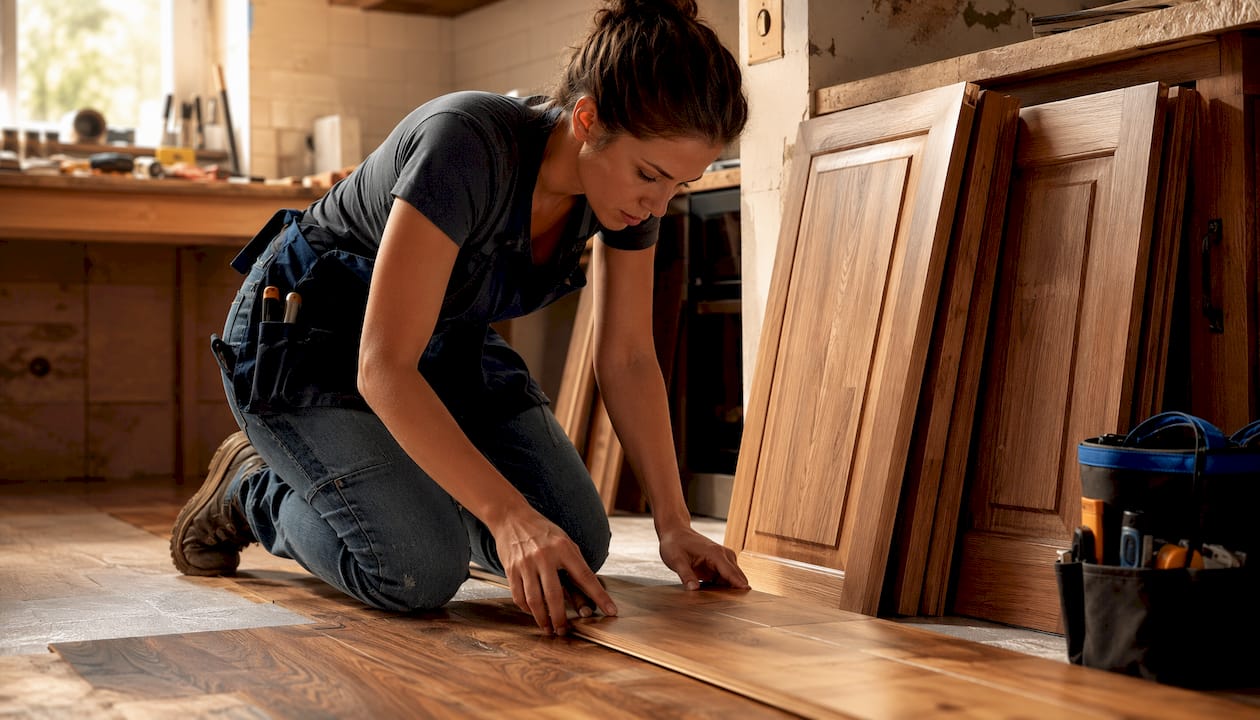
Flooring is the highest-wear application in any home. It takes foot traffic, furniture movement, and the occasional dropped pan. Solid hardwood floors can be sanded and refinished multiple times, which is why they outlast most alternatives in living rooms and bedrooms.
Stair treads and handrails are where hardwood earns its keep on edges. It takes routed profiles and detail work that synthetic materials cannot replicate, and a refinished tread matches new flooring without a full replacement. Exposed treads are a visual feature; a hardwood runner over a painted substrate is a cost-conscious alternative that still looks sharp.
Cabinet door faces and visible millwork are almost always hardwood, while the box interior is typically plywood. That split is intentional: the face is what you see, and hardwood delivers the grain and color. The box needs stability, not beauty.
Hardwood performs better than many synthetic products on exposed edges, treads, handrails, and tabletops because it takes edge detail and refinishing well, which is why it remains common in stair parts, furniture, and premium millwork.
Built-ins and shelving in living rooms and home offices use hardwood for the face frames and door fronts, with plywood carcasses behind them. Trim and molding cover transitions between surfaces and add architectural character; you have likely seen it framing doorways in older New Jersey homes. Wall paneling and wainscoting are purely visual, and species choice here is almost entirely about color and grain. Custom furniture (dining tables, benches, desks) relies on hardwood for density, finish quality, and the ability to repair surface scratches. Butcher-block countertops in kitchens combine hardwood’s workability with a surface that can be oiled and renewed. Interior doors use solid hardwood stiles and rails for weight, sound dampening, and a finish that holds up to daily contact.
How do you choose the right hardwood species?
The Janka hardness test measures the force needed to embed a steel ball halfway into a wood sample, giving you a direct comparison of wear resistance across species. Higher numbers mean more resistance to denting and scratching, which matters most for floors and stair treads. For furniture and cabinet faces, color and grain often outweigh hardness.
| Species | Janka (lbf) | Typical Use | Notes |
|---|---|---|---|
| Hickory | 1,820 | High-traffic floors, rustic interiors | Strong color contrast; active grain |
| Hard Maple | — | Floors, work surfaces, cabinets | Pale, fine grain; clean-lined rooms |
| White Oak | — | Floors, stairs, cabinets, furniture | Moisture-tolerant; controlled grain |
| Red Oak | — | Floors, trim, refinishing work | Warmer undertones; common in older NJ homes |
| Walnut | 1,010 | Furniture, millwork, lower-traffic rooms | Deep brown; prioritize appearance over hardness |
| Cherry | 950 | Cabinets, built-ins, furniture | Darkens with age and light exposure |
Practical selection rules: For entryways and kitchens, go with Hickory, Maple, or White Oak. For a dining table or built-in bookcase where the look matters most, Walnut and Cherry are the go-to choices. Near wet areas or on exterior millwork, white oak and teak offer natural moisture resistance that Cherry and Walnut simply do not have.
Pro Tip: Ask your contractor for a finish sample on your chosen species before committing. Cherry looks very different at installation versus two years later after light exposure darkens it.
Where is solid hardwood not the right choice?
Hardwood is not a universal solution. Using it in the wrong place creates movement problems, unnecessary expense, and callbacks. Knowing where to stop is part of what separates a skilled contractor from one who just sells you more material.
Avoid solid hardwood in these situations:
- Wide hidden panels (cabinet backs, drawer bottoms, interior partitions): solid wood moves seasonally across the grain, and a wide panel with no room to move will crack or buckle.
- Long unsupported spans: hardwood’s weight and movement make it a poor choice for large unsupported shelving without engineered backing.
- Damp-exposed exteriors: most domestic species degrade quickly outdoors without significant finishing and maintenance; use white oak, ipe, or treated alternatives.
- Below-grade or concrete-slab installations: moisture vapor from concrete causes solid hardwood to cup and warp; engineered hardwood or tile is the right call.
Plywood, MDF, and veneered panels solve most of these problems. Plywood handles wide panels and carcass work without movement issues. MDF takes paint and routed profiles cleanly, making it the standard substrate for painted trim. Engineered hardwood flooring gives you the real wood surface with a dimensionally stable core for slabs and radiant-heat systems.
Pro Tip: A contractor using the right hybrid approach will specify hardwood faces and solid parts where you see and touch them, and plywood or engineered substrates everywhere else. If someone quotes you solid hardwood for cabinet boxes, ask why.
The distinction between finish and structural elements is exactly where material decisions get made correctly or expensively.
What joinery methods actually matter for lasting hardwood work?
Professional joinery is what separates hardwood work that lasts decades from work that loosens, racks, or fails at the glue line within a few years. Mortise-and-tenon and dovetail joints provide mechanical interlocks that resist racking and movement far better than glue-and-screw butt joints.
Joinery choice is often what separates amateur results from professional outcomes: mechanical interlocks like mortise-and-tenon and dovetails resist racking and movement far better than glue-and-screw butt joints.
Here is where each method shows up in practice:
- Mortise-and-tenon: door frames, chair legs, table bases. The mechanical lock handles the stress of repeated use.
- Dovetail: drawer boxes. The interlocking geometry resists the pulling force every drawer takes thousands of times.
- Rail-and-stile with floating panel: cabinet doors and frame-and-panel doors. The panel floats inside the frame, allowing seasonal movement without cracking.
- Floating tenon (loose tenon): tabletops and wide panels, where breadboard ends accommodate cross-grain movement and prevent splits.
Dense hardwoods also demand careful surface prep and glue management. Tight grain limits glue penetration, so experienced shop workers adjust open time and clamping technique to get reliable glue lines. Dry-fitting assemblies before final glue-up is standard practice at the professional level; it catches fit problems in the shop rather than on your job site.
For a deeper look at how these techniques apply to residential projects, joinery techniques for lasting homes covers the specifics.
What should you expect for timeline and cost on a hardwood project?
A hardwood carpentry project moves through five phases: design and drawings, material procurement, shop fabrication, site installation, and finishing. The total timeline depends heavily on species availability and joinery complexity.
| Phase | Typical Duration | What Extends It |
|---|---|---|
| Design and drawings | about one week | Custom profiles, complex built-ins |
| Material procurement | 1–3 weeks | Specialty species, wide slabs, figured grain |
| Shop fabrication | 1–4 weeks | Custom joinery, multiple components |
| Site installation | 1–5 days | Site prep, existing conditions, repairs |
| Finishing (stain/varnish/oil) | several days | Coats required, drying time, species porosity |
Detailed drawings and cutting lists in the planning phase significantly reduce surprises and keep material waste low. A contractor who skips this step is one whose quote will change mid-project.
Primary cost drivers:
- Species choice (Walnut and Cherry cost more than Oak or Maple)
- Joinery complexity (mortise-and-tenon takes more shop time than pocket screws)
- Finish level (hand-rubbed oil versus sprayed lacquer)
- Site conditions (out-of-square walls, subfloor repairs, existing trim removal)
The most practical way to control cost is the hybrid approach: hardwood on every face you see, engineered or plywood substrates on everything hidden. You get the look without paying for solid wood where it does not matter.
How does Rockenterprisecontracting handle hardwood projects in Monmouth and Ocean County?
Rockenterprisecontracting is a licensed, family-owned contractor based in Shrewsbury, NJ, with the owner personally overseeing every project. For hardwood carpentry, that means full shop drawings and cutting lists before any material is ordered, skilled joinery and finishing, and a documented workflow that keeps the project on scope.
Professional craftsmanship starts in planning: detailed shop drawings and cutting lists align client expectations with the finished product and reduce material waste and rework.
Trust signals homeowners should look for:
- Licensed contractor credentials (Rockenterprisecontracting holds current NJ licensing)
- Portfolio with before-and-after photos of completed hardwood projects
- Thumbtack 5.0 rating with 100% positive feedback
- Documented cutting lists and shop drawings provided before work begins
- Owner-present site oversight on every job
Typical project types in Monmouth and Ocean County include kitchen cabinet refreshes with hardwood door faces, stair tread and handrail upgrades, and built-in bookcases for living rooms and home offices. When getting a quote, ask the contractor to show you their drawings process, name the species they recommend and why, and describe the joinery method for each component.
Key Takeaways
Hardwood carpentry delivers lasting value when species, joinery, and material placement are matched to the job. Hire a licensed local contractor like Rockenterprisecontracting for custom hardwood work in Monmouth and Ocean County.
| Point | Details |
|---|---|
| Use hardwood on visible faces | Cabinet boxes, panel backs, and hidden spans perform better in plywood or engineered substrates. |
| Match species to Janka expectations | Hickory (1,820 lbf) for high-traffic floors; Walnut (1,010 lbf) and Cherry (950 lbf) suited for furniture and cabinets based on appearance and moderate hardness. |
| Require drawings and cutting lists | A contractor who skips this step will likely change the scope or price mid-project. |
| Prefer proven joinery | Mortise-and-tenon and dovetail joints outlast glue-and-screw assemblies by years in high-stress applications. |
| Rockenterprisecontracting | Licensed, owner-supervised hardwood carpentry across Monmouth and Ocean County with a 5.0 Thumbtack rating. |
What most homeowners get wrong about hardwood carpentry
The conversation about hardwood almost always starts with species and finish. That is the wrong starting point. The decision that actually determines whether a project holds up for twenty years is joinery, and most homeowners never ask about it.
A cabinet built with rail-and-stile frames and floating panels will still be square and tight when your kids inherit the house. One built with pocket screws and glue will rack, the doors will bind, and the faces will gap at the joints. The wood species is the same in both cases. The difference is entirely in how the parts connect.
The same logic applies to stair treads, built-ins, and furniture. Hardwood is durable, but it is not self-sufficient. It moves seasonally, it responds to humidity, and it will telegraph every shortcut in the joinery within a few years. The species choice matters. The finish matters. But the joinery is what you are really paying for when you hire a skilled carpenter, and it is the first thing worth asking about.
Rockenterprisecontracting serves Monmouth and Ocean County homeowners
When you contact Rockenterprisecontracting, the process starts with a site visit and a detailed quote that includes species recommendations, shop drawings, and a realistic timeline. There are no vague estimates and no surprises mid-project.
Rockenterprisecontracting’s finish carpentry services cover the full range of residential hardwood work: stair upgrades, kitchen cabinet faces, built-in bookcases, trim and molding, and custom furniture. The owner is on-site for every job, and the 5.0 Thumbtack rating with 100% positive feedback reflects that hands-on standard. If you are planning a hardwood project and want to plan it the right way, reach out for a quote and get the drawings and cutting list before any material is ordered.
Useful sources
These are the primary references used throughout this article.
- USDA Forest Service hardwood properties — Janka hardness data for Hickory, Walnut, Cherry, and other species.
- Decorative Hardwoods technical brief — Material selection guidance: hardwood faces vs. engineered substrates.
- HardwoodInfo — Overview of residential hardwood applications.
- ArchitectureCourses.org hardwood guide — Species comparison table, outdoor suitability, and application matching.
- Swedish Wood Joinery Handbook — Drawings, cutting lists, and joinery planning for furniture and built-ins.
- Palmer Timber cladding handbook — Planning documentation and cutting list standards.
- ToolsRadar joinery methods — Mortise-and-tenon, dovetail, and butt joint performance comparison.
FAQ
What are the most common hardwood carpentry applications in a home?
Flooring, stair treads, cabinet door faces, built-ins, trim and molding, wall paneling, custom furniture, butcher-block countertops, and interior doors are the primary residential uses, as documented by HardwoodInfo.
Which hardwood species is best for high-traffic floors?
Hickory, rated at 1,820 lbf on the Janka scale, is the hardest widely available domestic species and the top choice for entryways and high-traffic floors. Walnut (1,010 lbf) and Cherry (950 lbf) are preferred for furniture and cabinets where appearance matters more than hardness.
When should a contractor use plywood instead of solid hardwood?
Plywood is the right call for cabinet boxes, wide hidden panels, and any application below grade or over concrete, where solid hardwood’s seasonal movement causes warping and cracking.
What joinery should I ask about when hiring a hardwood carpenter?
Ask specifically about mortise-and-tenon for frames and doors, dovetails for drawer boxes, and rail-and-stile construction for cabinet doors. These methods outlast glue-and-screw assemblies by years.
Does Rockenterprisecontracting provide drawings before starting a hardwood project?
Yes. Rockenterprisecontracting provides shop drawings and cutting lists before any material is ordered, which keeps the scope and cost aligned with what was quoted.