
If you own a home near the Jersey Shore, your deck takes a beating that inland decks simply don’t. Deck renovation in coastal New Jersey means contending with salt air, relentless humidity, and UV exposure that can quietly destroy wood and hardware long before you notice anything wrong. The good news is that with the right materials, a smart inspection process, and proven renovation techniques, you can build a deck that holds up for decades. This guide walks you through every stage, from spotting early damage to choosing materials that actually last by the shore.
Table of Contents
- Key takeaways
- Deck renovation in coastal New Jersey: understanding the damage first
- Preparing for your shore deck project
- Executing the renovation: techniques that hold up by the shore
- Post-renovation maintenance for coastal decks
- My honest take on coastal deck renovations
- Ready to renovate your deck with confidence?
- FAQ
Key takeaways
| Point | Details |
|---|---|
| Salt air damages early | Corrosion and rot can affect up to 20% of deck surface before becoming visible to the eye. |
| Budget for surprises | Always set aside a 10% contingency fund to cover hidden joist or ledger damage found during work. |
| Material choice matters | Composite decking and 316-grade stainless steel hardware outperform standard wood and nails in coastal climates. |
| Resurfacing saves money | If your frame is structurally sound, resurfacing boards and railings costs far less than full replacement. |
| Maintenance extends lifespan | Seasonal cleaning, sealing, and inspections dramatically reduce long-term repair costs on shore properties. |
Deck renovation in coastal New Jersey: understanding the damage first
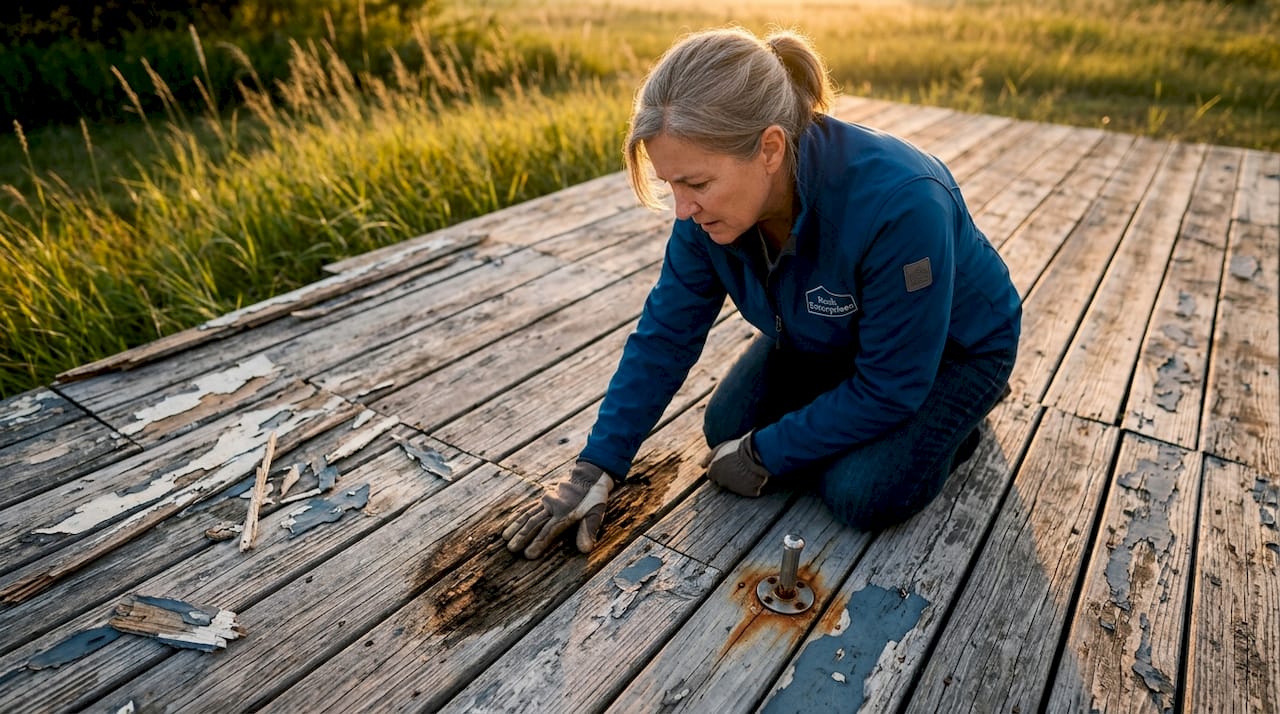
Before you pick a material or call a contractor, you need to understand what the coast is actually doing to your deck. Salt air is relentless. It works into wood grain and metal fasteners at a microscopic level, and the damage compounds every season. Salt-air corrosion and hidden rot can affect up to 20% of a deck’s surface before you can see any obvious sign of a problem.
That statistic should change how you look at your deck. What appears to be a surface-level cosmetic issue, say a few discolored boards, often signals something much deeper going on in the structure beneath.
Here are the warning signs every coastal homeowner should check for:
- Wobbly railings or posts that move when you push them, which points to rot at the base or corroded hardware
- Bouncing or soft spots when you walk across the deck, a sign that joists or beams beneath the surface have weakened
- Mushrooming wood around nail heads, where the wood fibers have swelled and pushed outward due to moisture intrusion
- Rust staining on or around fasteners, which means standard hardware is already failing
- Discoloration or dark streaking along boards, often the first visible sign of mold or rot working from the inside out
Ledger boards and joists are the most dangerous places for hidden rot because they are covered by the decking surface. Hidden joist and ledger rot is often only discovered after boards are removed, which is exactly why a professional inspection before any renovation work is non-negotiable.
The coastal New Jersey climate accelerates this process faster than most homeowners expect. High humidity, salt spray from ocean breezes, and intense summer UV radiation work together to break down both wood fibers and metal connections. Catching this damage early is the difference between a manageable renovation and a full structural rebuild.
Preparing for your shore deck project
Once you have a clear picture of the damage, preparation becomes your most important investment. Skipping this stage is where most renovation projects go wrong.
Getting a professional inspection
Hire a contractor with specific experience in coastal deck repair and shore-area building codes. A general home inspector may miss the nuanced signs of salt-induced structural failure. You want someone who will pull up boards if needed and probe joists with a screwdriver to check for soft spots.
Setting a realistic budget
A standard deck renovation on a coastal property costs more than an inland project because of the materials required and the likelihood of finding hidden damage. Always allocate a 10% contingency fund on top of your base estimate. That buffer covers the rot or corroded hardware you did not know was there until work began.
Choosing the right materials
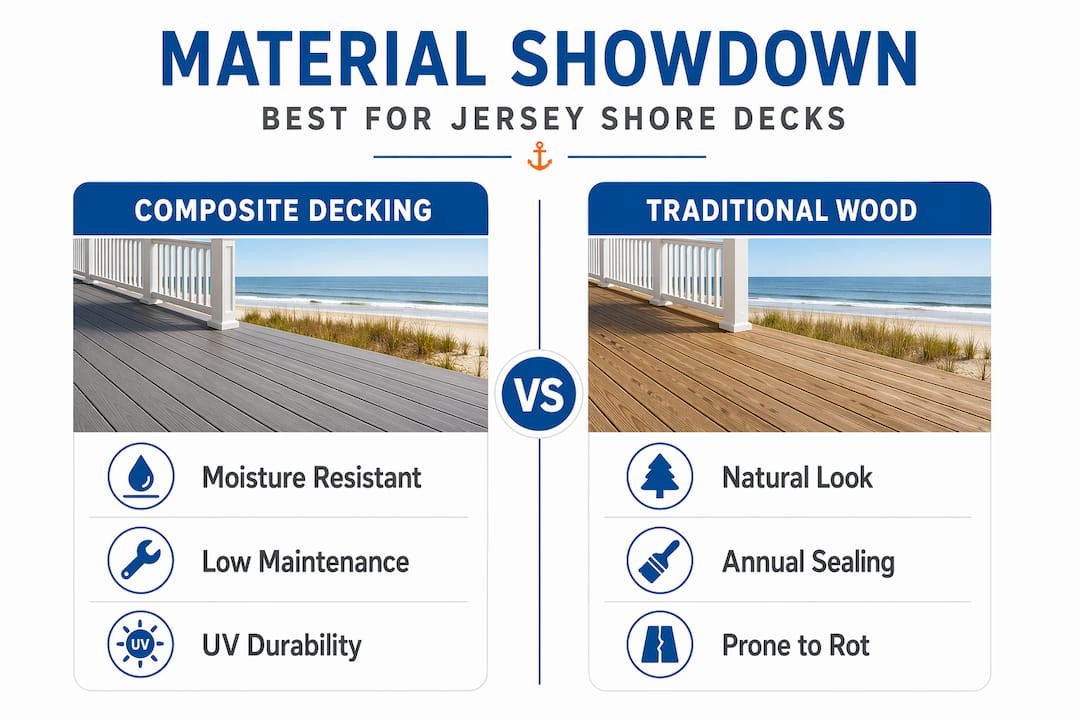
This is where deck upgrades in New Jersey live or die. The best deck materials for coastal environments share two traits: resistance to moisture and resistance to salt-induced corrosion.
| Material | Coastal benefit | Consideration |
|---|---|---|
| Composite decking | Resists moisture, rot, and UV fading | Higher upfront cost, lower long-term maintenance |
| Pressure-treated lumber | Affordable, widely available | Requires regular sealing; less durable than composites in salt air |
| 316-grade stainless steel fasteners | Resists coastal corrosion far better than standard hardware | More expensive than zinc-coated alternatives |
| Aluminum railings | Will not rust, low maintenance | Limited design options vs. wood |
| PVC trim boards | Impervious to moisture | Can expand and contract with temperature changes |
Composite decking offers better resistance against moisture and requires less maintenance than traditional wood in coastal New Jersey. Though the upfront cost is higher, composites reduce long-term costs by eliminating rot, splintering, and annual refinishing.
Pro Tip: Ask your contractor specifically about hidden fastener systems for composite boards. They eliminate the surface holes where water can pool and penetrate, which is a common failure point on coastal decks.
New Jersey also requires permits for most deck renovation projects, particularly when structural work is involved. Your contractor should handle the permit process and confirm that your railing heights and structural connections meet current state code before work begins.
Executing the renovation: techniques that hold up by the shore
Good execution on a coastal deck renovation comes down to details that most homeowners never think about until something fails.
Step-by-step renovation process
- Remove all surface boards to expose joists, beams, and the ledger board connection to the house. This is the only way to assess true structural condition.
- Inspect and replace compromised framing. Any joist or beam that shows soft spots, discoloration, or visible rot gets replaced before new surface material goes down.
- Install proper flashing at the ledger board. Flashing installation at the ledger board prevents water intrusion, which is the primary cause of structural failure in coastal environments. This step is non-negotiable.
- Upgrade all fasteners to 316-grade stainless steel. Standard hardware corrodes quickly in salt air. 316-grade stainless steel screws significantly improve deck lifespan by resisting coastal corrosion where common nails fail within a few years.
- Install new decking surface. Whether you choose composite or pressure-treated wood, follow manufacturer spacing guidelines to allow for drainage and airflow beneath the boards.
- Address drainage before finishing. Drainage engineering before surface upgrades protects both the new deck and your home’s foundation in coastal zones. Water pooling near the structure undermines everything you just built.
Resurfacing vs. full replacement
Not every deck needs to be torn down to the ground. Deck resurfacing replaces only boards, railings, and stairs while keeping the structural frame intact. If your frame passes inspection, resurfacing is a budget-smart path that delivers a fresh look at a fraction of full replacement cost.
Pro Tip: If you are on the fence between resurfacing and full replacement, have your contractor perform a probe test on every joist before deciding. A sound frame is worth keeping. A compromised one is not.
Design ideas worth considering
Renovating decks by the shore gives you a real opportunity to upgrade the look and function of your outdoor space. Custom deck upgrades focusing on design details can enhance aesthetics without major structural changes. Picture framing around the deck perimeter, integrated LED lighting, and cable railing systems all add a high-end feel. Multi-level zones with defined spaces for dining and lounging make smaller decks feel intentional and spacious. You can explore space-maximizing design strategies to get more function out of a compact footprint.
Post-renovation maintenance for coastal decks
A well-executed renovation is only as good as the maintenance that follows it. Coastal conditions do not stop working on your deck after the project is done.
After any renovation, run through this checklist before calling the project complete:
- All railings pass a firm push test with no movement
- Fasteners are flush or countersunk with no surface rust
- Flashing at the ledger board shows no gaps or lifted edges
- Drainage channels around the deck perimeter flow freely
- All composite or wood surfaces are clean, dry, and sealed if required by the manufacturer
For ongoing care, a seasonal maintenance routine specific to the Jersey Shore climate makes a significant difference. In the spring, rinse the entire deck with fresh water to remove salt buildup from winter storms. Check all hardware for early signs of corrosion. In the fall, clear debris from between boards and reapply sealant to any wood surfaces. Proactive upkeep on deck lifespan is not just about appearance. Homeowners who maintain their decks consistently spend significantly less on repairs over a ten-year period compared to those who address problems only when they become obvious.
When you notice soft spots returning, railings loosening, or water pooling on the surface rather than draining, those are your signals to bring in a professional for a reassessment before small issues compound into structural problems.
My honest take on coastal deck renovations
I’ve worked on enough shore properties to say this plainly: most homeowners dramatically underestimate what salt air does to a deck over time. I’ve seen decks that looked perfectly fine from the surface turn out to have joists that crumbled when you touched them. The damage hides. That is what makes it expensive when people wait.
What I’ve learned is that the material conversation almost always gets more attention than the structural inspection, and that is backwards. Putting beautiful composite boards over a rotting frame is a waste of money. Get the inspection right first. Then choose your materials.
I also think the contractor selection piece gets glossed over too often. Local contractors with shore-specific experience know the code requirements, the hardware that actually holds up, and the failure points unique to this climate. That knowledge is worth paying for. A contractor who learned their trade inland will miss things that a shore-experienced team catches on day one.
My recommendation: don’t treat a coastal deck renovation as a cosmetic project. Treat it as a structural investment. The homeowners who do that end up with decks that last twenty years. The ones who don’t are back to square one in five.
— ryan
Ready to renovate your deck with confidence?
If your deck is showing signs of coastal wear or you simply want to upgrade your outdoor living space before another season passes, Rockenterprisecontracting is the team to call. Based in Shrewsbury, NJ, Rock Enterprises brings hands-on expertise and owner-level oversight to every project across Monmouth and Ocean County. The team handles everything from structural inspections to permit filing to final finishing, with full transparency on pricing at every step.

Whether you need a full structural rebuild or a targeted resurfacing project, Rock Enterprises delivers the craftsmanship your shore property deserves. Explore their expert renovation services or review the complete renovation guide to understand the full scope of what a professional renovation can do for your home. Contact Rock Enterprises today for a free estimate and get your deck project started the right way.
FAQ
What makes coastal New Jersey decks wear out faster?
Salt air, high humidity, and UV exposure accelerate rot and corrosion on both wood and metal hardware. Coastal decks typically degrade faster than inland decks because of this combined environmental pressure.
How do I know if my deck needs resurfacing or full replacement?
If the structural frame, joists, and ledger board pass a professional inspection, resurfacing the boards, railings, and stairs is a cost-effective option. Full replacement is necessary when the framing itself shows rot or significant corrosion.
What are the best fasteners for a coastal deck in New Jersey?
316-grade stainless steel fasteners are the standard recommendation for coastal environments. They resist salt-induced corrosion far better than standard zinc-coated or galvanized hardware, which can fail within a few seasons near the shore.
Do I need a permit for deck renovation in New Jersey?
Most structural deck renovations in New Jersey require a permit, particularly when framing, ledger connections, or railings are involved. A licensed contractor familiar with local codes will handle the permit process as part of the project.
How often should a coastal deck be inspected and maintained?
A professional inspection every one to two years is a sound practice for shore properties. Seasonal maintenance, including fresh-water rinsing in spring and sealant reapplication in fall, keeps salt buildup and moisture damage from accelerating between inspections.
Recommended
- Blog – Rock Enterprises | General Contractor Shrewsbury NJ
- Transform Your Living Space: The Ultimate Guide to Home Renovations with Rock Enterprises – Rock Enterprises | General Contractor Shrewsbury NJ
- Transform Your Living Space with Expert Home Renovations – Rock Enterprises | General Contractor Shrewsbury NJ
- Local Home Improvement Insights: Maximizing Your Property’s Potential – Rock Enterprises | General Contractor Shrewsbury NJ