
TL;DR:
- Home renovation improves comfort by sealing air leaks, upgrading insulation, and controlling moisture. Coordinated upgrades to the building envelope, HVAC, and ventilation ensure lasting comfort and energy efficiency. Conducting a home energy audit helps identify the root causes of discomfort before renovation work begins.
Home renovation increases home comfort by sealing air leaks, upgrading insulation, improving ventilation, and controlling moisture to create a stable, healthy indoor environment. The industry term for this coordinated approach is building performance renovation, and it goes well beyond cosmetic upgrades. Homeowners who treat comfort as a system, not a checklist, see the most lasting results. This guide covers the four pillars of comfort-driven renovation: the thermal envelope, HVAC and ventilation, indoor air quality, and home energy audits.
How renovation increases home comfort through building envelope upgrades
The thermal envelope is every surface that separates conditioned space from the outdoors: walls, roof, foundation, windows, and doors. Upgrading insulation and air sealing reduces drafts and stabilizes indoor temperatures by limiting heat loss and uncontrolled air movement. That means no more cold corners in january or overheated bedrooms in august. The result is a house that holds its temperature without the HVAC system working overtime.
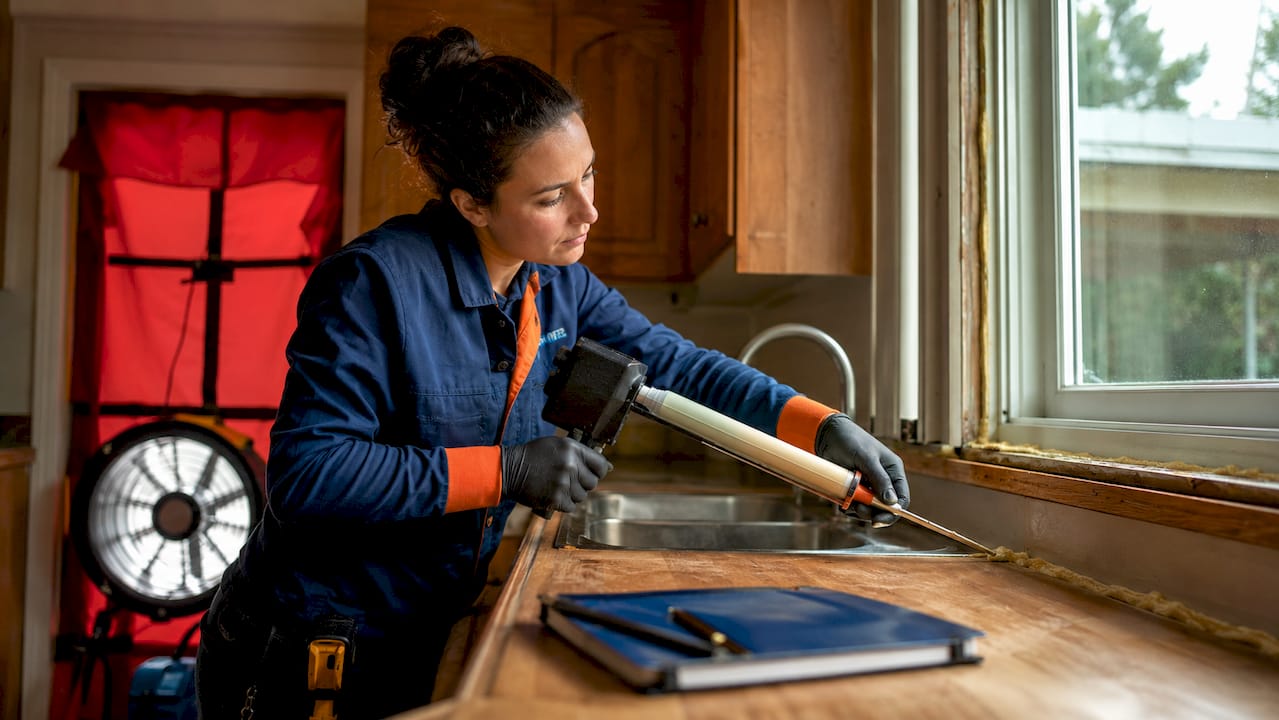
Air sealing is the most underrated upgrade in this category. Most homeowners focus on insulation R-values, but gaps around rim joists, attic hatches, and recessed lights let conditioned air escape faster than insulation can compensate. Sealing those gaps first, then adding insulation, is the correct sequence. Skipping air sealing and adding insulation alone leaves the root problem unsolved.
Practical envelope upgrades worth prioritizing:
- Attic air sealing and insulation: The attic is the single largest source of heat loss in most homes. Sealing penetrations before blowing in cellulose or fiberglass delivers the fastest comfort return.
- Rim joist insulation: The rim joist sits at the top of your foundation wall. It is often uninsulated and accounts for significant cold air infiltration in basements and first floors.
- Window and door weatherstripping: Worn seals around frames allow drafts even when windows are closed. Replacing weatherstripping costs little and eliminates noticeable cold spots.
- Wall insulation: Older homes in Monmouth and Ocean County often have little or no wall insulation. Dense-pack cellulose blown into existing cavities adds thermal resistance without full gut renovation.
Pro Tip: Start every envelope project with a blower door test. This diagnostic pressurizes your home and reveals exactly where air is escaping, so you spend money on real problems instead of guessing.
Coordinated envelope and HVAC upgrades avoid comfort tradeoffs like cold surfaces or moisture issues by aligning system performance with building changes. Tightening the envelope without updating the HVAC system can create new problems. The two upgrades work as a pair.
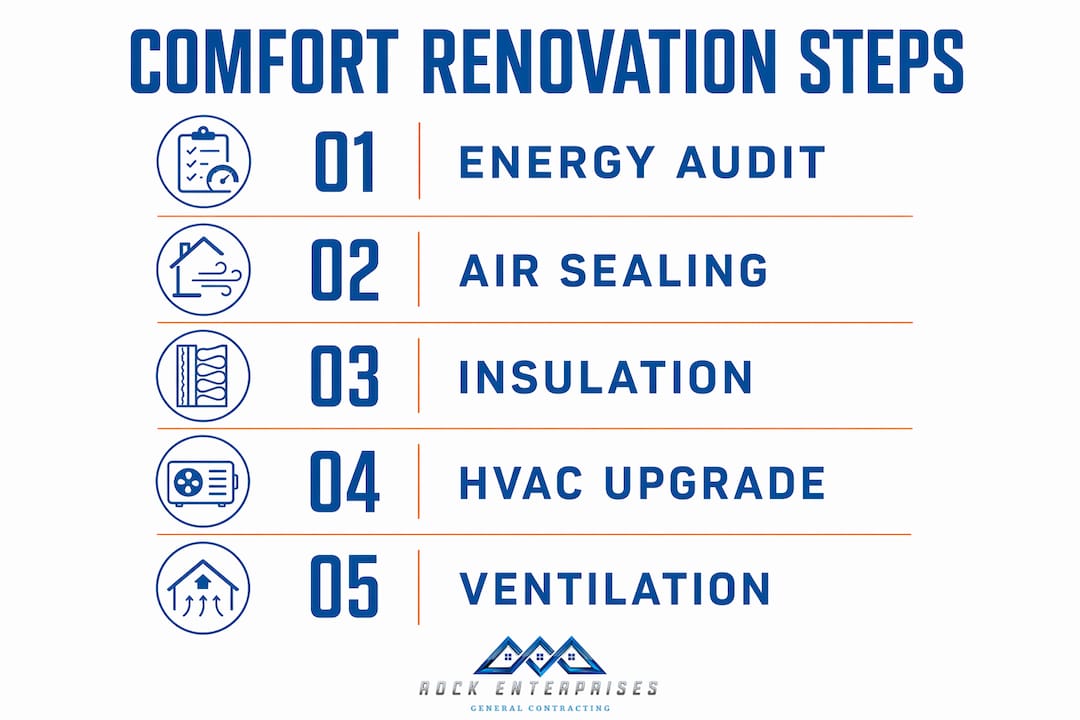
Why HVAC and ventilation upgrades must work together
Tightening a home’s envelope reduces the random air leakage that older homes relied on for fresh air. IRC 2024 codes require planned ventilation systems to manage indoor pollutants because reduced infiltration in airtight homes creates air quality risks without mechanical ventilation. Comfort requires both a tight shell and a controlled fresh air supply. Ignoring ventilation after tightening a home leads to stuffiness, condensation on windows, and mold growth.
Maintaining indoor relative humidity between 30% and 60% during the heating season supports thermal comfort and reduces mold growth risks. That range is defined by ASHRAE 55, the standard governing occupied space comfort. Below 30%, air feels dry and irritating. Above 60%, surfaces stay damp and mold becomes a real risk.
A coordinated HVAC and ventilation upgrade follows this sequence:
- Seal the envelope first. Reducing infiltration lowers the load on the HVAC system and makes mechanical ventilation sizing more accurate.
- Right-size the HVAC equipment. Heat pumps and HVAC equipment operate more efficiently in well-insulated, airtight homes, potentially allowing smaller equipment size. Oversized equipment short-cycles and fails to dehumidify properly.
- Add mechanical ventilation. An energy recovery ventilator (ERV) or heat recovery ventilator (HRV) brings in fresh air while capturing most of the energy from exhaust air. This keeps air quality high without wasting heating or cooling energy.
- Install humidity controls. A whole-house dehumidifier or humidifier, wired into the HVAC system, holds humidity in the 30–60% range automatically.
- Balance the duct system. Uneven duct design is a leading cause of hot and cold rooms. Rebalancing or redesigning duct runs after envelope work corrects temperature differences between floors and rooms.
Insulation combined with appropriate ventilation reduces damp and mold risk, improves thermal comfort, and lowers heating costs. Treating these two systems as separate projects is the most common and costly mistake homeowners make.
How does indoor air quality change after a renovation?
Indoor air quality (IAQ) gets worse before it gets better during a renovation. Dust, volatile organic compounds (VOCs) from paints and adhesives, and particulates from demolition all spike during active remodeling. Managing dust and VOCs at the source combined with ventilation controls improves indoor air quality and occupant comfort during and after the project.
Source control is the first and most effective strategy for maintaining good IAQ during renovation. That means using low-VOC paints, formaldehyde-free cabinetry, and water-based adhesives wherever possible. It also means sealing off work areas with plastic sheeting and running exhaust fans continuously during demolition and finishing work.
Key IAQ practices for renovation projects:
- Isolate work zones: Hang plastic barriers between active work areas and occupied spaces. This keeps dust out of bedrooms and living areas during the project.
- Use low-VOC materials: Specify low-VOC or zero-VOC paints, stains, and adhesives. The difference in off-gassing is significant and the cost premium is minimal.
- Ventilate aggressively after finishing: EPA guidance recommends enhanced ventilation during and for at least 72 hours after finishing work to reduce off-gassing exposure. Open windows, run exhaust fans, and keep the HVAC fan running continuously.
- Replace HVAC filters after completion: Construction dust loads filters quickly. A clogged filter recirculates fine particles through the home for weeks after the project ends.
Pro Tip: Schedule flooring, cabinet, and paint installation in sequence rather than simultaneously. Staggering finish work reduces the peak VOC load in the home and makes post-renovation ventilation more effective.
For homeowners doing bathroom work, a bathroom remodel done right addresses moisture at the source, which directly protects IAQ long after the project is complete.
What role do home energy audits play in comfort renovations?
A home energy audit identifies the root causes of discomfort before any money is spent on materials or labor. Energy audits range from walkthroughs to detailed diagnostic analyses used to prioritize comfort-driven renovation upgrades. A walk-through audit catches obvious problems like missing insulation and broken weatherstripping. A diagnostic audit uses a blower door, thermal camera, and combustion safety testing to map every air leak and thermal weakness in the building.
The audit finding most homeowners do not expect is uneven duct design. Cold rooms and hot rooms are rarely caused by insulation alone. Undersized supply ducts, missing return air paths, and leaky duct connections create pressure imbalances that no amount of insulation can fix. An audit reveals these issues before you invest in the wrong upgrade.
| Audit type | Tools used | Best for |
|---|---|---|
| Walk-through audit | Visual inspection, basic blower door | Identifying obvious air leaks and insulation gaps |
| Diagnostic audit | Blower door, thermal camera, duct blaster | Mapping all infiltration points and duct leakage |
| Combustion safety test | CO analyzer, draft gauge | Homes with gas appliances or older heating systems |
| Full building performance audit | All of the above plus energy modeling | Whole-home renovation planning and HVAC right-sizing |
Audits also reduce renovation waste. Homeowners who skip audits often insulate walls when the real problem is an uninsulated attic, or replace windows when the actual draft source is a leaky rim joist. An audit costs a fraction of a misguided renovation project. For homeowners planning whole-home renovation work, an audit is the logical first step before any contractor is hired.
Key Takeaways
Renovation increases home comfort most effectively when envelope upgrades, HVAC improvements, and indoor air quality controls are planned and executed as a coordinated system rather than separate projects.
| Point | Details |
|---|---|
| Seal before insulating | Air sealing rim joists, attic penetrations, and framing gaps delivers faster comfort gains than insulation alone. |
| Ventilate after tightening | Mechanical ventilation (ERV or HRV) is required when a home is made airtight to prevent moisture and air quality problems. |
| Control humidity actively | Keeping indoor relative humidity between 30% and 60% prevents both dry air discomfort and mold growth. |
| Audit before spending | A diagnostic energy audit identifies the actual cause of drafts and uneven temperatures before renovation money is committed. |
| Manage IAQ during the project | Source control and 72-hour post-finishing ventilation reduce VOC and dust exposure for occupants. |
What I’ve learned from watching comfort renovations go wrong
After years of working on renovation projects across Monmouth and Ocean County, the pattern I see most often is homeowners who invest heavily in visible upgrades while skipping the work that actually drives comfort. New cabinets and tile look great. But if the attic is still leaking air and the HVAC system is oversized for the new envelope, the house still feels drafty in winter and sticky in summer.
The second mistake is treating ventilation as optional. I have seen well-intentioned homeowners seal their homes tight, add new insulation, and then wonder why they have condensation on windows and a musty smell by spring. The answer is always the same: no mechanical ventilation was added. Comfort requires fresh air, not just controlled temperature.
The third thing I tell every homeowner before we start: sequence matters more than budget. Doing envelope work before HVAC replacement lets you right-size the new equipment. Doing it in reverse means you pay for an oversized system that runs inefficiently in a tighter home. The order of operations is not a detail. It is the difference between a renovation that delivers lasting comfort and one that creates new problems.
Post-renovation verification matters too. Walk every room after the project is done. Check for drafts, smell for off-gassing, and note any rooms that still feel different from the rest of the house. Catching these issues in the first week costs almost nothing to fix. Catching them a year later costs significantly more.
— ryan
Rockenterprisecontracting’s approach to comfort-focused renovation
Rockenterprisecontracting is a licensed, family-owned general contracting company based in Shrewsbury, NJ, with a 5.0-star rating on Thumbtack and a 100% positive feedback score. Every project is personally overseen by the owner, which means comfort details do not get lost between subcontractors.

Whether you need a kitchen overhaul, a bathroom renovation, or a full building performance upgrade, Rockenterprisecontracting handles the complete scope with transparent pricing and hands-on craftsmanship. Homeowners across Monmouth and Ocean County trust this team to get the sequencing right. Review the full range of personalized renovation services available, or explore the completed renovation portfolio to see comfort-focused results firsthand.
FAQ
What is the most effective first step in a comfort renovation?
A diagnostic home energy audit is the most effective first step. It identifies the actual sources of drafts, uneven temperatures, and humidity problems before any money is spent on materials.
How does insulation improve indoor comfort?
Insulation reduces heat transfer through walls, ceilings, and floors, which stabilizes indoor temperatures and eliminates cold spots. It works best when combined with air sealing to stop uncontrolled air movement.
Why does a tighter home need mechanical ventilation?
Tighter homes reduce the random air leakage that older homes relied on for fresh air. Without mechanical ventilation, moisture and indoor pollutants accumulate, leading to stuffiness, condensation, and mold growth.
What humidity level is comfortable indoors?
ASHRAE 55 defines the comfortable range as 30–60% relative humidity. Below 30%, air feels dry and irritating. Above 60%, surfaces stay damp and mold risk increases significantly.
How long do VOCs off-gas after a renovation?
Off-gassing from new finishes can last several days after renovation is complete. EPA guidance recommends enhanced ventilation for at least 72 hours after finishing work to reduce occupant exposure.
Recommended
- What Is a Renovation Contract? a Homeowner’s Guide
- Blog – Rock Enterprises | General Contractor Shrewsbury NJ
- Why Bathroom Renovation Adds Home Value in 2026
- Transform Your Living Space: The Ultimate Guide to Home Renovations with Rock Enterprises – Rock Enterprises | General Contractor Shrewsbury NJ