
TL;DR:
- Managing home renovation stress involves planning, communication, and self-care to keep anxiety in check. Recognizing the emotional cycle helps homeowners stay calm despite routine disruptions, decision fatigue, and budget surprises. Clear scheduling, realistic budgeting, and prioritizing health are essential to completing a project with less stress.
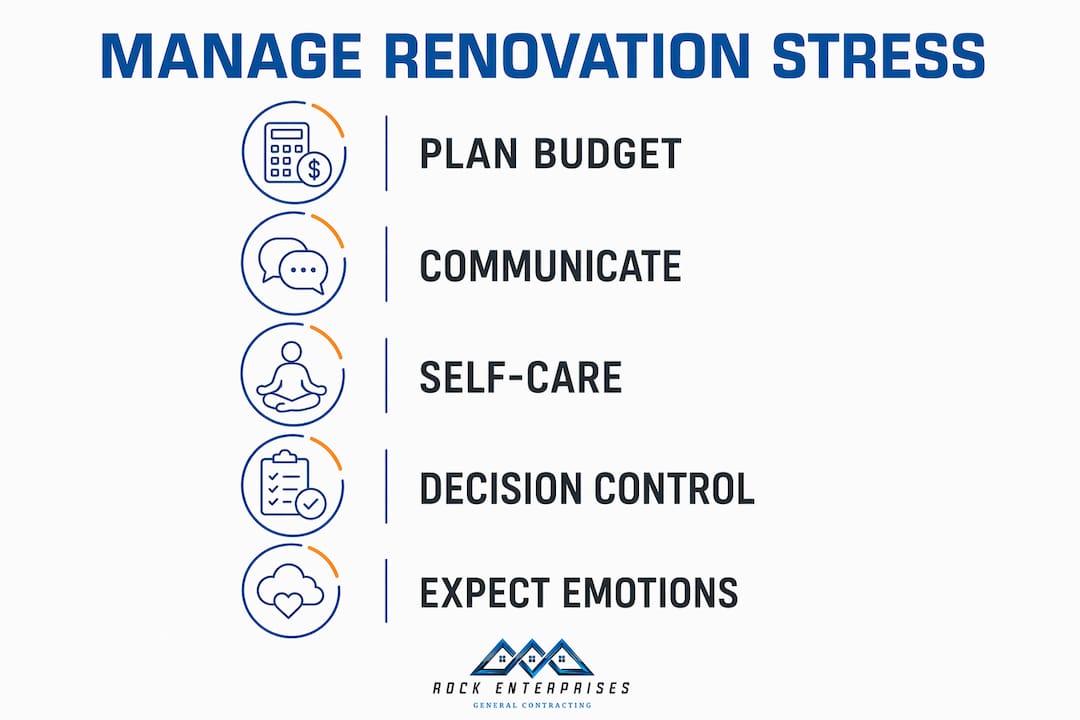
Managing home renovation stress is defined as the deliberate use of planning, communication, and self-care strategies to keep anxiety from derailing your project and your wellbeing. Renovations rank among the most disruptive events a household can experience, right alongside moving and major life changes. The good news is that stress during a remodel is predictable, which means it is also preventable. This guide gives you a research-backed framework to stay calm, stay on budget, and finish with a home you love.
What causes home renovation stress and how does it unfold?
Renovation stress follows a recognizable pattern. Most homeowners move through four emotional stages: excitement at the start, frustration during demolition, fatigue when delays pile up, and renewed confidence as the finish line comes into view. Knowing this cycle exists is not just reassuring. It is the first practical tool for dealing with renovation stress, because you stop interpreting frustration as a sign something is wrong.
The triggers behind each stage are consistent across projects:
- Routine disruption. Living without a functional kitchen or bathroom for weeks wears on the whole family.
- Decision fatigue. Choosing tile, fixtures, paint, and hardware all at once drains mental energy fast.
- Budget surprises. Unexpected costs feel like failures, even when they are normal.
- Communication gaps. Not knowing what is happening on your own property creates anxiety faster than almost anything else.
“Recognizing the renovation emotional cycle and knowing it is temporary helps homeowners remain calm through the most frustrating phases. The cycle is not a sign of a bad project. It is a sign of a normal one.”
Understanding these triggers gives you a map. You can prepare for each phase instead of reacting to it. A clear renovation timeline helps you see where you are in that cycle at any given moment.
How to plan and budget realistically to reduce renovation anxiety
Realistic planning is the single most effective way to reduce renovation anxiety before it starts. Labor costs average about 65% of a renovation budget, with materials covering the remaining 35%. That split surprises most homeowners who focus only on materials when estimating costs. Soft costs like permits, design fees, and inspections need real quotes, not guesses.

| Budget Category | Typical Share | Planning Action |
|---|---|---|
| Labor | ~65% | Get itemized bids from licensed contractors |
| Materials | ~35% | Price out selections before finalizing scope |
| Soft costs | Varies | Request actual permit and inspection fees |
| Contingency | 10–15% | Reserve before project starts, not after |
A 10–15% contingency budget should be set aside before demolition begins. This reserve is not pessimism. It is the financial breathing room that keeps a surprise plumbing issue from becoming a crisis.
Prioritizing your must-haves versus nice-to-haves before you sign a contract also matters. Write two lists: one for features the project cannot succeed without, and one for upgrades you would add if the budget allows. This framework prevents emotional spending mid-project when fatigue clouds judgment.
Pro Tip: Lock every finish selection, including tile, fixtures, and hardware, before work begins. Making changes after construction starts triggers expensive rework and is one of the top causes of budget overruns and added stress.
How does communication with your contractor reduce stress?
Clear, proactive communication lowers stress more than trying to avoid problems. Professional teams that flag changes immediately reduce homeowner anxiety because uncertainty is the real enemy, not the change itself. The moment you stop hearing from your contractor, your imagination fills the silence with worst-case scenarios.
A structured communication rhythm solves this problem directly:
- Schedule weekly check-ins with a fixed agenda covering progress, upcoming decisions, and any issues. Weekly, scheduled communication with a fixed agenda prevents uncertainty and keeps emotions stable.
- Use a shared tracking tool. A simple shared document or project app where both parties log updates removes the need to chase information.
- Document every decision in writing. Verbal agreements disappear. A written record protects both you and your contractor.
- Raise questions early. A concern voiced on day three costs nothing to address. The same concern raised on day thirty may require tearing out finished work.
- Avoid micromanaging. Stay informed without hovering. Trust your contractor to execute while you focus on decisions only you can make.
Pro Tip: Before your first weekly check-in, send your contractor a short written list of your top three concerns. This sets the tone for transparent communication and signals that you are an organized, engaged homeowner.
Understanding how subcontractors fit into your renovation team also reduces confusion about who is responsible for what on any given day.
Practical self-care tips to prevent renovation burnout
Physical and emotional health directly affect how you handle renovation stress. Ignoring physical health during renovation leads to burnout, and burnout makes every small setback feel catastrophic. Exercise and mindfulness are not luxuries during a remodel. They are tools for staying functional.
Specific adjustments that work:
- Create dust-free zones. Maintaining clean, organized spaces in at least one or two rooms preserves a sense of normalcy and reduces disruption-related stress.
- Protect your sleep routine. Construction noise and displaced furniture disrupt sleep. Use white noise, blackout curtains, or a temporary bedroom setup to guard rest.
- Keep one daily ritual intact. Whether it is a morning walk, a family dinner, or a weekend activity, one unchanged routine anchors your sense of stability.
- Schedule breaks from the project. Plan one evening per week where you do not discuss, research, or think about the renovation.
- Recognize fatigue signals early. Irritability, difficulty concentrating, and loss of enthusiasm for the project are signs you need a reset, not a push through.
Pro Tip: If you are managing a complex home remodel, consider hiring a project manager or working with a general contractor who handles daily coordination. Delegating that cognitive load is one of the most effective stress-relief strategies available.
How should you manage decisions and change orders to avoid overruns?
Decision management is where stress-free home upgrades either succeed or collapse. The volume of choices in a renovation is genuinely overwhelming, and reactive decisions made under pressure almost always cost more money and produce worse results.
The most effective approach combines three practices:
- Batch decisions by category. Limiting options to 2–3 curated choices per decision and grouping them by room or fixture type prevents decision fatigue and keeps the project moving.
- Use formal change orders for every scope change. A change order is a written document that describes the modification, its cost, and its impact on the timeline. Never allow verbal scope changes. A solid renovation contract should require written change orders by default.
- Withhold final payment until completion. Releasing the last 10–15% of payment only after the punch list is resolved, inspections are passed, and lien waivers are secured protects you from incomplete work. This is standard best practice, not a negotiating tactic.
| Approach | Risk level | Outcome |
|---|---|---|
| Verbal scope changes | High | Disputes, cost surprises, delays |
| Written change orders | Low | Clear accountability, budget control |
| Paying in full before punch list | High | Reduced contractor urgency to finish |
| Staged payments tied to milestones | Low | Strong incentive for quality completion |
Focus on the overall project goal rather than perfection at each individual stage. Imperfect grout lines during installation often disappear after cleaning. Judging work before it is finished adds stress without adding value.
Key Takeaways
Effective renovation stress management requires realistic budgeting, structured communication, disciplined decision-making, and consistent self-care from day one.
| Point | Details |
|---|---|
| Know the emotional cycle | Expect excitement, frustration, fatigue, and recovery. Each phase is normal and temporary. |
| Budget with a contingency | Reserve 10–15% above your estimate before work begins to absorb surprises without panic. |
| Communicate on a schedule | Weekly check-ins with a fixed agenda prevent uncertainty and keep anxiety low. |
| Lock scope before demolition | All finish selections and scope decisions should be final before any work starts. |
| Protect your physical health | Exercise, sleep, and routine breaks are non-negotiable tools for avoiding burnout. |
What I have learned about renovation stress after years in the field
The homeowners who handle renovation stress best are not the ones who never feel it. They are the ones who planned for it. Every project I have been involved with hits a rough patch, usually around the midpoint when the excitement has worn off and the finish line is not yet visible. That phase is where most of the reactive decisions happen, and reactive decisions are almost always expensive.
The single biggest mistake I see is homeowners treating communication as something that happens when there is a problem, rather than something that happens on a schedule. By the time a concern becomes a conversation, it has usually already become a cost. A weekly check-in is not bureaucracy. It is insurance.
I also think the self-care advice in renovation guides gets dismissed too quickly. Skipping exercise, losing sleep, and eating poorly for six weeks does not just affect your mood. It affects your judgment. And your judgment is what protects your budget. Treat your physical health during a renovation the same way you treat your contingency fund: as a non-negotiable line item.
— ryan
How Rockenterprisecontracting makes renovation less stressful
Rockenterprisecontracting is a licensed, family-owned general contracting company based in Shrewsbury, NJ, and the owner personally oversees every project. That hands-on approach eliminates the communication gaps that cause most renovation stress. You always know who is accountable.

With a 5.0-star rating on Thumbtack and a 100% positive feedback score, Rockenterprisecontracting has built its reputation on transparency and craftsmanship across Monmouth and Ocean County. Their personalized renovation services are designed around your specific goals, not a one-size-fits-all template. If you want to see how a well-managed renovation actually feels, explore how their work increases home comfort from start to finish.
FAQ
What is the most common cause of home renovation stress?
Budget surprises and communication gaps are the two leading causes of renovation stress. Setting a 10–15% contingency and scheduling weekly contractor check-ins addresses both directly.
How do I avoid decision fatigue during a remodel?
Batch your decisions by room or fixture category and limit yourself to 2–3 curated options per choice. This approach prevents mental exhaustion and keeps the project moving forward.
When should I withhold final payment from my contractor?
Withhold the final 10–15% of payment until the punch list is complete, inspections are passed, and lien waivers are signed. This protects you from incomplete or substandard work.
How can I maintain normalcy while living through a renovation?
Designate at least one dust-free room as a clean retreat, protect your sleep routine, and keep one daily ritual unchanged. These small boundaries reduce disruption-related stress significantly.
Does hiring a general contractor reduce renovation stress?
Yes. A general contractor manages subcontractors, schedules, and daily coordination, which removes the largest source of cognitive load for homeowners and reduces anxiety throughout the project.