
TL;DR:
- Careful planning, accurate measurements, and early decision-making are essential for successful custom carpentry projects. homeowners should integrate millwork early, account for lead times, and use wall mapping techniques to ensure precise fits. Establishing a detailed decision log and a contingency buffer helps prevent delays and budget overruns throughout the process.
Custom carpentry is bespoke woodworking designed and built specifically for your home’s dimensions, style, and functional needs. When you plan a custom carpentry project at home with intention, you get built-ins, cabinetry, and trim that fit perfectly rather than close enough. The difference between a frustrating renovation and a satisfying one almost always comes down to how early and how thoroughly you plan. This guide walks you through every phase of planning custom woodworking, from the first consultation to final installation, with practical advice on materials, timelines, and coordination that most homeowners only learn the hard way.
What are the essential steps to plan a custom carpentry project at home?
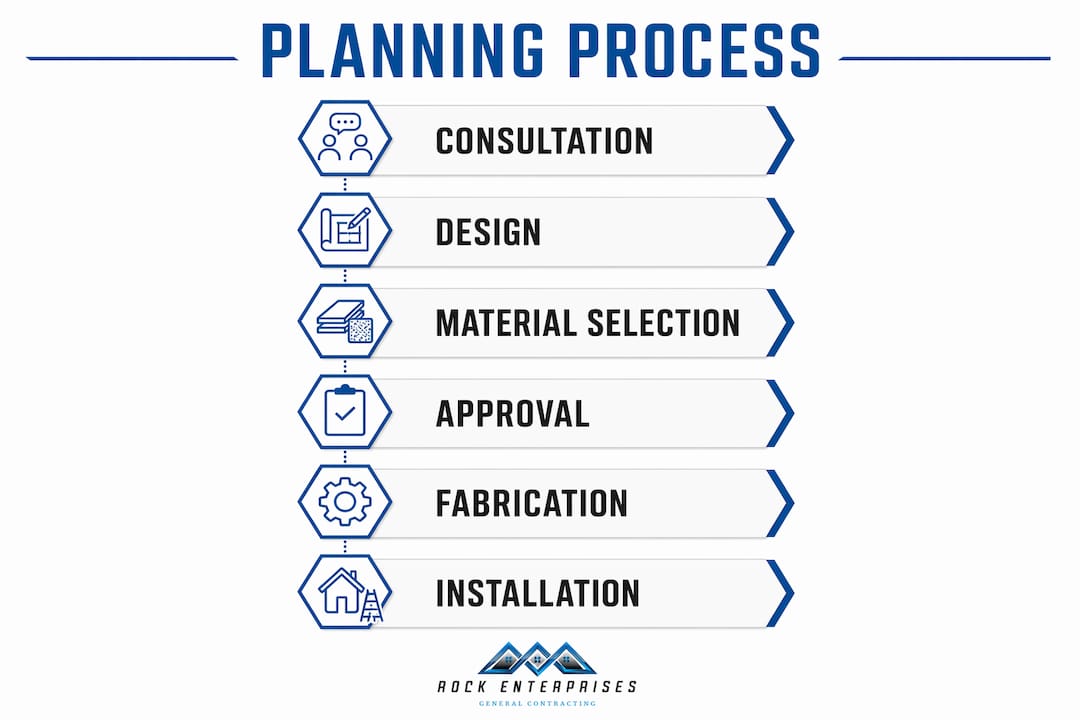
The custom carpentry planning workflow follows six defined phases: consultation, design planning, material selection, fabrication, installation, and final review. Each phase builds on the last, and skipping or rushing any one of them creates problems that are expensive to fix later. Here is how each step works in practice.
-
Initial consultation. This is where you capture your project goals, the site conditions, and any constraints like ceiling height, existing trim profiles, or structural elements. Bring photos, measurements, and inspiration images. The more specific you are at this stage, the fewer surprises appear later.
-
Design planning. Your carpenter or designer produces drawings, mockups, and layout decisions based on the consultation. This phase covers door swing clearances, drawer stack configurations, and how the piece relates to adjacent walls, windows, and floors. Revisions are cheap here. They are very expensive after fabrication begins.
-
Material and finish selection. You choose wood species, hardware, and finish type. These decisions affect both the look and the long-term maintenance of the piece. More on this in the next section.
-
Fabrication. The actual woodworking happens in a shop, not on-site. Precision cutting, joinery, and finishing are done in a controlled environment. This phase takes the longest and cannot be rushed without sacrificing quality.
-
Installation. Pieces are delivered and fitted to the site. A skilled installer accounts for wall irregularities, shimming, and scribing to achieve a tight, clean result.
-
Final review. You walk through the finished work with your contractor to catch any fit, finish, or function issues before the project closes out.
Pro Tip: Write down every decision made during the consultation and design phases. A simple decision log prevents miscommunication and gives you a reference point if questions arise during fabrication.
Project management in construction follows the same logic: document early, decide firmly, and build on a stable foundation of agreed-upon choices.
How do you choose the right materials, finishes, and hardware?
Material selection is where custom carpentry design becomes personal. The wood species you choose affects grain pattern, color, hardness, and how the piece ages over time. Wood species characteristics vary significantly across the most common options:
- Oak is dense, durable, and takes stain well. It shows strong grain, which reads as traditional or rustic depending on the finish.
- Walnut is rich, dark, and naturally beautiful with minimal finishing. It costs more but requires less to look exceptional.
- Pine is soft, affordable, and ideal for painted pieces. It dents more easily than hardwoods, so it works best in lower-traffic applications.
- Cherry darkens beautifully with age and UV exposure. It starts light and develops a warm, reddish tone over years of use.
Finish choices shape both appearance and maintenance demands. Stains enhance grain while adding color. Paints conceal grain and offer the widest color range. Clear coats protect the natural wood while keeping it visible. Matte finishes hide fingerprints better than gloss, which matters in kitchens and family rooms.
Hardware is the last decision but not a minor one. Handles, hinges, and drawer slides affect daily usability as much as they affect aesthetics. Soft-close hinges and full-extension drawer slides add cost but eliminate the most common complaints homeowners have about cabinetry after the fact.
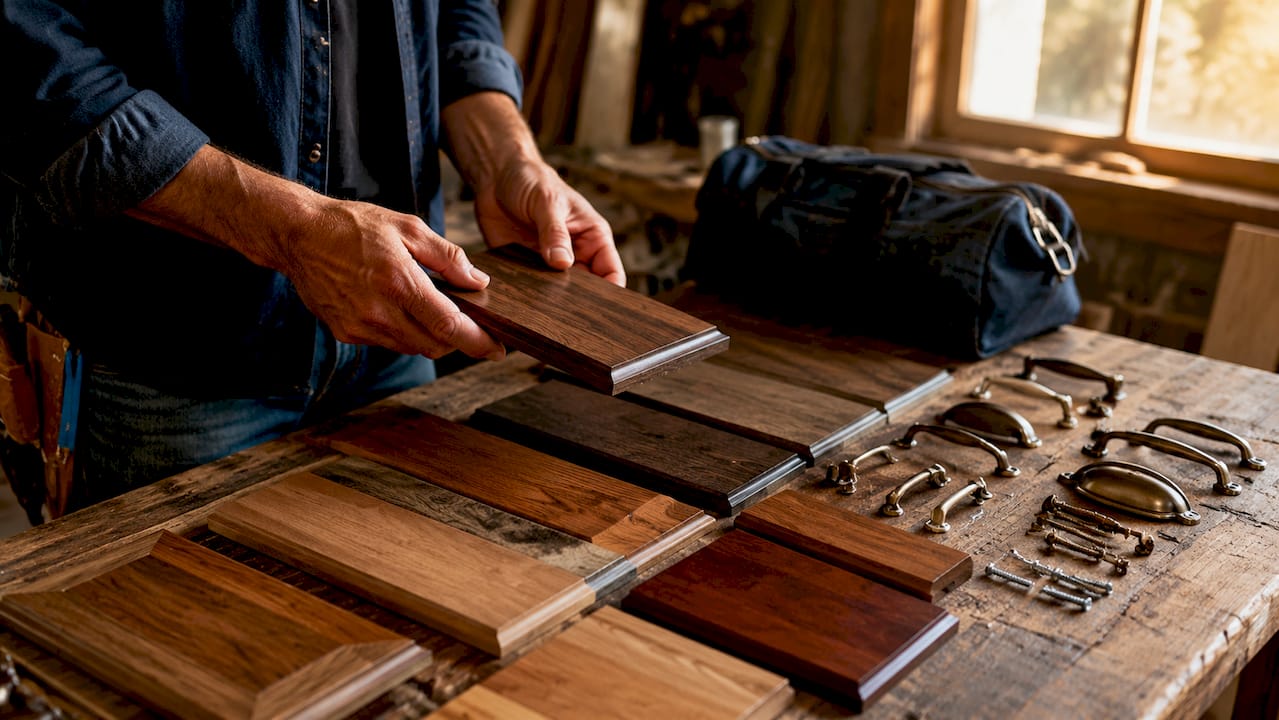
Pro Tip: Request physical samples of your wood species and finish combination before approving fabrication. Colors and textures look different under your home’s lighting than they do in a showroom or on a screen.
| Material factor | What it affects |
|---|---|
| Wood species | Durability, grain appearance, stain absorption |
| Finish type | Maintenance frequency, sheen level, color options |
| Hardware grade | Daily function, noise, longevity of moving parts |
| Budget allocation | Where to invest more and where to economize |
Balancing budget with aesthetics means knowing where quality pays off. Drawer boxes and hinges are worth spending on. Decorative molding profiles can often use a less expensive species painted to match.
How to coordinate carpentry work with your home renovation timeline
Treating custom woodworking as an afterthought is the single most common mistake in home renovation carpentry. Millwork integrated early into a renovation plan allows framing, plumbing, electrical, and HVAC work to accommodate the cabinetry rather than conflict with it. When millwork is added late, trades have already set pipes, wires, and ducts in locations that force compromises in the carpentry design.
Custom cabinetry lead times commonly run 8 to 16 weeks after design approval, broken into distinct phases:
- Design development: 2 to 6 weeks
- Production and finishing: 4 to 10 weeks
- Delivery and installation: 1 to 3 weeks
That range means a kitchen renovation starting in January needs cabinet design approved no later than October of the prior year to avoid delays. Most homeowners underestimate this by months.
Pro Tip: Work backward from your target installation date to set your design approval deadline. Count the full lead time by phase and add two weeks as a buffer for shipping or production delays.
Ordering cabinets early after design approval prevents the most common bottleneck in renovation scheduling. Countertop templating, backsplash installation, and appliance delivery all depend on cabinets being in place first. One late order cascades into weeks of idle time for every trade that follows.
Budget contingency belongs in this conversation too. A 15 to 20 percent contingency buffer is standard practice in renovation budgeting. This is not padding. It is a risk management tool that absorbs hidden conditions, permit delays, and material price changes without derailing the project. Homes in Monmouth and Ocean County, like older properties throughout New Jersey, frequently reveal surprises behind walls once demolition begins.
| Phase | Typical duration |
|---|---|
| Design development | 2 to 6 weeks |
| Production and finishing | 4 to 10 weeks |
| Delivery and installation | 1 to 3 weeks |
| Total lead time | 8 to 16 weeks |
What measurement techniques ensure a perfect fit in older homes?
Older homes are rarely square, plumb, or level. Walls bow, floors slope, and corners that look 90 degrees are often 88 or 92. Mapping wall projections and variances before fabrication begins is the technique that separates a tight, professional fit from one that shows gaps and shimming.
Here is how experienced carpenters handle irregular spaces:
- Wall mapping. Measure the wall at multiple heights and record the high and low points. This tells the fabricator where the cabinet back needs relief cuts or where filler panels are needed.
- Scribing. A scribe strip is a thin piece of wood attached to the cabinet side that gets cut to follow the wall’s exact profile. The result looks like the cabinet grew out of the wall.
- Build-out techniques. When a wall projects too far for scribing to solve, a furring strip or blocking brings the adjacent surface flush before installation begins.
- Field verification. Always re-measure after drywall and finish coats are applied. Drywall adds thickness and texture that changes the actual usable dimensions of a space.
“Measure irregular walls once and use this to inform either scribing or build-out techniques to achieve tight, concealed fits rather than forcing cabinets to match uneven surfaces.” — Cabinet Joint
Communicating site-specific challenges to your carpenter before fabrication is not optional. A carpenter who has never seen your space will build to the drawings. If the drawings do not reflect reality, the piece will not fit reality. Bring your carpenter on-site for a field measure after rough work is complete and before production begins. That single visit prevents the most expensive category of custom carpentry mistakes.
Finish carpentry planning for older homes specifically requires this level of field verification. The investment in accurate measurement pays back in installation time and a result that looks intentional rather than adjusted.
Key takeaways
Successful custom carpentry projects are built on early decisions, accurate measurements, and realistic timelines that account for every production phase.
| Point | Details |
|---|---|
| Follow the six-phase workflow | Move from consultation through final review without skipping design or fabrication steps. |
| Choose materials before fabrication | Select wood species, finish, and hardware with physical samples under your home’s actual lighting. |
| Plan lead times of 8 to 16 weeks | Count backward from your install date and approve designs early to avoid cascading delays. |
| Integrate millwork before rough-in | Lock carpentry designs before framing and trades work so other systems accommodate your cabinetry. |
| Map walls before fabrication | Measure at multiple heights and use scribing or build-out methods to achieve a tight fit in irregular spaces. |
Why I think most homeowners underestimate the planning phase
After working through dozens of renovation projects across New Jersey, the pattern I see most often is this: homeowners spend months choosing tile and paint colors, then try to finalize cabinet designs two weeks before installation. That sequence is backward, and it costs real money.
Late design decisions cause schedule delays and increased expense. The production queue at a quality cabinet shop does not pause because a homeowner is still deciding on door profiles. Your slot gets pushed, your trades sit idle, and your project runs over budget before a single cabinet is hung.
The tool I recommend to every homeowner I work with is a decision log paired with room priority tiers. A decision log with priority tiers separates must-haves from nice-to-haves from dream features. When budget pressure arrives, and it always does, you already know what to protect and what to trade away. That clarity prevents the rework and redesign that turns a 12-week project into a 20-week one.
The other thing I have learned is that contingency is not a sign of poor planning. It is proof of honest planning. Homeowners who resist setting aside a 15 to 20 percent buffer are the ones who end up making painful cuts mid-project when a hidden condition appears. The buffer is not money you expect to spend. It is money you hope not to need.
Custom carpentry rewards patience and preparation more than almost any other home improvement category. The pieces that look effortless are the ones that were planned obsessively.
— ryan
Start your custom carpentry project with Rock Enterprises
Planning a home woodworking project is straightforward when you have the right team coordinating every phase. Rockenterprisecontracting is a licensed, family-owned general contracting company based in Shrewsbury, NJ, with a 5.0-star rating on Thumbtack and a 100% positive feedback score from homeowners across Monmouth and Ocean County.

The owner personally oversees every project, which means your custom carpentry design decisions are handled with direct accountability rather than passed down a chain of subcontractors. From initial consultation through final installation, Rockenterprisecontracting brings transparent pricing and hands-on craftsmanship to every project. If you are ready to move from planning to building, explore the home renovation services that Rockenterprisecontracting offers and schedule a consultation to get started.
FAQ
How long does a custom carpentry project typically take?
Project duration varies from a few days for simple trim installations to several weeks for full built-in cabinetry or complex ceiling features. Custom cabinetry alone carries a lead time of 8 to 16 weeks from design approval to installation.
When should I finalize my carpentry designs during a renovation?
Finalize carpentry designs before rough-in work begins. Locking millwork designs early allows framing, electrical, and plumbing trades to accommodate your cabinetry rather than conflict with it.
How much contingency budget should I set aside for a carpentry project?
Set aside 15 to 20 percent of your total project budget as a contingency. This buffer absorbs hidden conditions, permit delays, and material price changes without forcing mid-project design cuts.
What wood species works best for kitchen cabinetry?
Oak and walnut are the most durable choices for kitchen cabinetry. Oak takes stain well and handles heavy use, while walnut offers natural beauty with minimal finishing required.
How do carpenters handle walls that are not square or level?
Carpenters use wall mapping, scribing, and build-out techniques to achieve tight fits in irregular spaces. Field verification after drywall is applied is necessary because finish coats change actual usable dimensions.
Recommended
- Finish Carpentry – Rock Enterprises | General Contractor Shrewsbury NJ
- Building Your Dream Home: The Custom Home Construction Journey with Rock Enterprises – Rock Enterprises | General Contractor Shrewsbury NJ
- Building Your Dream Home: Custom Home Construction with Rock Enterprises – Rock Enterprises | General Contractor Shrewsbury NJ
- Effective Project Management in Construction: Key Strategies for Success – Rock Enterprises | General Contractor Shrewsbury NJ