
TL;DR:
- Reliable tile installation depends on verified credentials, transparent pricing, and contractor oversight. Certified Contractors Of Georgia LLC holds certified tile installer credentials, while other top providers offer specialized services and consistent quality. Most tile projects cost between $10 and $50 per square foot, with proper surface preparation and curing time being essential for durability.
Who are the best local tile installers near you?
Finding reliable tile installation near me comes down to three things: verified credentials, transparent pricing, and a contractor who actually shows up to oversee the work. The eleven providers below cover a range of specializations, from CTI-certified teams to full-service remodelers, so you can match the right fit to your project before making a single call.
| Contractor | Specialties | Best For | Rating |
|---|---|---|---|
| Incredible Remodeling | Custom tile, full remodels | Experienced local remodelers | 5.0 ★ |
| S&S General Construction LLC | Broad tile services, competitive pricing | Budget-conscious homeowners | 5.0 ★ |
| Motion Contractor LLC | Waterproofing, substrate prep | Technical, challenging installs | 5.0 ★ |
| MC RenovatePross | Full renovation + tile | Consolidated project management | 5.0 ★ |
| DMS Flooring | Multi-material tile, design variety | Homeowners wanting material options | 5.0 ★ |
| Certified Contractors Of Georgia LLC | CTI-certified installers, licensed | Compliance-focused clients | 5.0 ★ |
| Uncle H | Personalized service, close oversight | Clients wanting direct communication | 5.0 ★ |
| Proremodelingvera | Full remodeling packages with tile | Simultaneous remodel and tile work | 5.0 ★ |
| LPK Creations Inc | Decorative, mosaic, custom tile | Artistic and unique tile applications | 5.0 ★ |
| Prestige Carpet & Flooring | Showroom selection + installation | Product selection bundled with install | 5.0 ★ |
| Certified Contractors Of Georgia, LLC | CTI-certified team, warranty-backed | Guaranteed expertise and compliance | 5.0 ★ |
A few providers stand out on substance. Certified Contractors Of Georgia LLC holds Certified Tile Installer (CTI) credentials, the only third-party assessment recognized by the U.S. tile industry. Motion Contractor LLC distinguishes itself through advanced waterproofing techniques and installation standards, the two steps where most tile failures actually begin. LPK Creations Inc is the go-to for decorative and mosaic work. Uncle H and Proremodelingvera suit homeowners who want a single point of contact from demo to grout.
How much does tile installation cost?
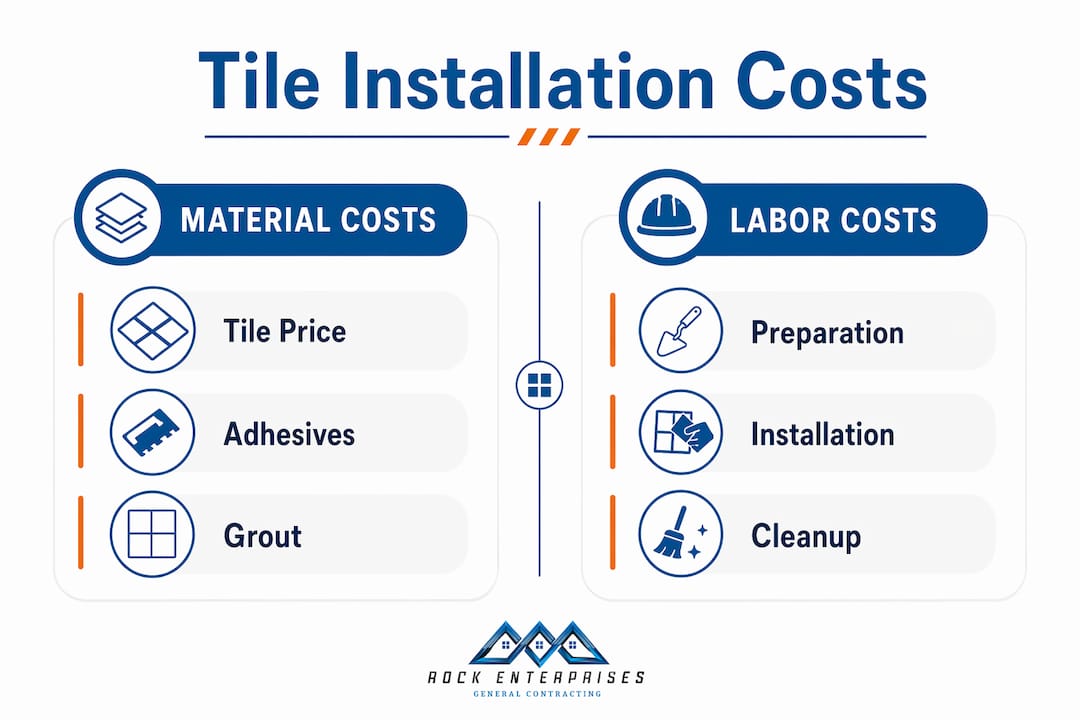
Most homeowners pay a typical range for professional tile installation that varies widely depending on the scope of the project. Smaller projects like a simple bathroom floor generally cost less, while extensive custom showers with large-format stone tile tend to be more expensive.
Typical range: $10–$50 per square foot installed, or $1,000–$10,000 for a complete project.
Labor is usually the largest variable. Tile type, room size, and the condition of the existing substrate all shift the final number. Here is what drives cost up or down:
- Tile material: Ceramic costs less than porcelain; natural stone and large-format tiles cost the most.
- Surface prep: Damaged subfloors or shower walls requiring a decoupling membrane add labor and material cost.
- Pattern complexity: Herringbone or diagonal layouts take longer to cut and set than straight runs.
- Room size: Smaller rooms cost more per square foot because setup time stays fixed.
- Warranty inclusion: Contractors who back labor with a written guarantee sometimes price slightly higher, but that coverage protects you if tiles shift or grout cracks within the warranty period.
Always get a written quote that separates material costs from labor. That split tells you immediately whether a contractor is padding one side.
How do you choose the right tile installer?
The credential that separates a trained professional from a general handyman is the Certified Tile Installer (CTI) designation, issued by the Ceramic Tile Education Foundation after a rigorous, independent skills assessment. Licensing alone does not guarantee tile-specific knowledge; CTI certification does.
Ask every candidate these questions before signing anything:
- What substrate preparation method do you use, and will you apply a waterproofing membrane?
- Which mortar and waterproofing products do you specify (e.g., Laticrete or Schluter systems)?
- What is your curing timeline before grouting and before the space can handle foot traffic?
- Do you carry a written labor warranty, and what does it cover?
- Can you show photos or references from a similar project?
Pro Tip: Contractors who personally oversee substrate prep and layout, rather than delegating those phases to a helper, produce far fewer installation failures over time. Ask directly who will be on-site during those critical steps.
Walk away if a contractor gives vague answers about waterproofing, has no portfolio, or cannot name the products they use. Transparency about method and materials is a baseline expectation from any professional installer, not a bonus. You can also review how to compare renovation quotes to avoid common pricing traps.
What should homeowners know about tile installation basics?
A professional tile installer, also called a tile setter, measures, cuts, and adheres tile to floors, walls, and wet areas using mortar, grout, and specialized setting materials. The CTI credential means that installer passed an independent knowledge and skills test beyond basic state licensing.
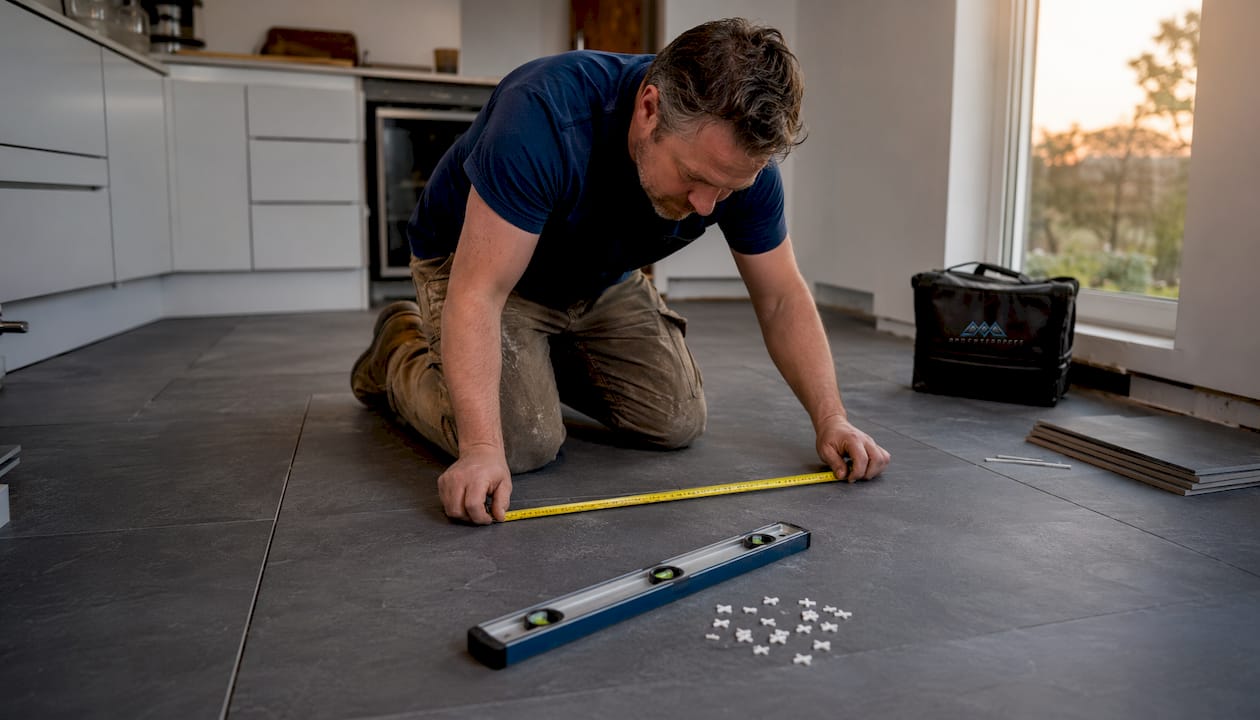
The 3-4-5 rule is the standard technique pros use to confirm a layout is perfectly square. Measure 3 feet along one wall, 4 feet along the adjacent wall, and the diagonal between those two points should equal exactly 5 feet. If it does not, the corner is not 90 degrees and the tile pattern will drift visibly over a long run.
Common tile services include bathroom floors and walls, kitchen backsplashes, shower surrounds, outdoor patios, and decorative mosaic features. The installation sequence matters as much as the tile itself:
- Substrate prep: Leveling, patching, and applying a waterproofing membrane where needed.
- Layout planning: Dry-fitting tiles and marking reference lines before any mortar goes down.
- Mortar and setting: Embedding tiles with the correct thinset for the material type.
- Curing: Mortar typically needs 24–48 hours before grouting; full curing before heavy use takes longer.
- Grouting and sealing: Finishing joints and applying sealer to protect grout from staining.
For a deeper look at how these steps apply to bathrooms specifically, the bathroom tile installation guide covers each phase in detail.
Why Rockenterprisecontracting stands out for tile work in New Jersey
Rockenterprisecontracting is a licensed, family-owned general contracting company based in Shrewsbury, NJ, serving Monmouth and Ocean County homeowners. The owner personally oversees every project, which means the person accountable for quality is on-site during substrate prep and layout, not just at the final walkthrough. That hands-on model is exactly what the 5 Benefits of Being a Certified Tile Installer research identifies as a key differentiator in professional tile work.
- Licensed and insured general contractor
- 5.0-star rating on Thumbtack with 100% positive feedback
- Owner-led oversight on every project phase
- Custom kitchen and bathroom tile work with transparent pricing
- Portfolio of completed renovations available for review
For homeowners who want to see the work before committing, the project portfolio shows completed tile and renovation projects across the region.
How long does a tile installation project take?
Most residential tile projects typically take several days to complete, varying with room size and complexity. Smaller jobs like a kitchen backsplash may finish quickly, while full bathroom projects require more time, especially accounting for mortar curing before grouting.
Large-format floor tile projects that involve extensive substrate work may require an extended timeline to complete. The curing phase is non-negotiable: rushing it causes tiles to shift and grout joints to crack within months. Plan for the space to be out of service for at least 72 hours after grouting before resuming normal use.
How do you get a tile installation estimate?
Most reputable local tile installers offer free on-site estimates, usually within a few business days of your inquiry. The process is straightforward: a contractor visits, measures the space, assesses the substrate condition, and provides a written quote that separates labor from materials.
Bring photos of your tile selection or have a style in mind before the visit. That lets the contractor flag any installation challenges specific to that tile type, such as large-format tiles needing a flatter substrate or natural stone requiring a penetrating sealer. Ask for the quote in writing with a line-item breakdown, and confirm whether the price includes removal of existing tile, substrate repair, and cleanup.
Rockenterprisecontracting: a hands-on alternative for NJ homeowners

If you are in Monmouth or Ocean County and want a contractor who treats your home like his own, Rockenterprisecontracting offers something the larger providers on this list cannot: the owner on-site, every day, for every phase. There is no crew handoff, no subcontracted labor, and no guessing about who is actually doing the work. That level of accountability shows up in the 5.0-star Thumbtack rating and 100% positive feedback from past clients.
Rockenterprisecontracting handles expert tile installation for bathrooms, kitchens, and custom projects, with transparent pricing from the first conversation. If you are weighing whether a full renovation makes sense alongside your tile project, the guide on how renovation improves daily living lays out the practical case clearly. Ready to get started? Contact Rockenterprisecontracting directly for a free estimate.
FAQ
How much does tile installation cost per square foot?
Professional tile installation typically costs $10–$50 per square foot, with total projects ranging from $1,000 to $10,000 depending on tile material, room size, and substrate condition.
What is a person who installs tile called?
A professional tile installer is also called a tile setter. Those who hold a Certified Tile Installer (CTI) credential have passed an independent skills assessment recognized by the U.S. tile industry.
What is the 3-4-5 rule for tile?
The 3-4-5 rule confirms a 90-degree corner: measure 3 feet along one wall, 4 feet along the adjacent wall, and the diagonal between those points should equal exactly 5 feet.
What is the average labor cost to install ceramic tile?
Labor for ceramic tile installation generally falls within the $10–$50 per square foot total range, with labor itself representing the largest portion of that cost alongside material and substrate prep expenses.
Key Takeaways
Certified credentials and hands-on contractor oversight are the two factors that most reliably separate a lasting tile installation from one that fails within a few years.
| Point | Details |
|---|---|
| CTI certification matters | The Certified Tile Installer credential is the only independent skills assessment recognized by the U.S. tile industry. |
| Cost range to expect | Most projects cost $10–$50 per square foot, with total budgets typically between $1,000 and $10,000. |
| Curing time is non-negotiable | Mortar needs 24–48 hours before grouting; rushing this step causes tile shifting and grout failure. |
| Ask about substrate prep | Waterproofing and leveling are where most tile failures start; always confirm the method and products before hiring. |
| Rockenterprisecontracting | A licensed, owner-led contractor in Shrewsbury, NJ, with a 5.0-star Thumbtack rating serving Monmouth and Ocean County. |