
TL;DR:
- Custom carpentry builds woodwork specifically for a home’s unique size and style, unlike standard options. It offers better fit, durability, and design character, especially in older or irregular homes. The process involves detailed planning, precise measurements, custom fabrication, and careful installation to ensure quality results.
Custom carpentry is woodwork designed and built specifically for your home’s exact dimensions, layout, and style rather than pulled off a shelf in a standard size. The industry term for most of this work is finish carpentry, which covers the visible, detail-oriented woodwork that defines a room’s character. Think built-in bookshelves, crown molding, wainscoting, fireplace mantels, and custom cabinetry. Unlike rough carpentry, which handles structural framing hidden inside walls, custom carpentry is what you see and touch every day. It is the craft that turns a builder-grade house into a home with real personality.
What is custom carpentry and how does it differ from standard woodwork?
Custom carpentry is woodwork designed and built for unique spaces or aesthetics rather than mass-produced parts, encompassing finish carpentry and millwork such as built-ins, mantels, wainscoting, and crown molding. That definition matters because it draws a hard line between what a carpenter builds for your specific home and what a factory produces for any home. Standard woodwork is made to fit most situations. Custom woodwork is made to fit yours.
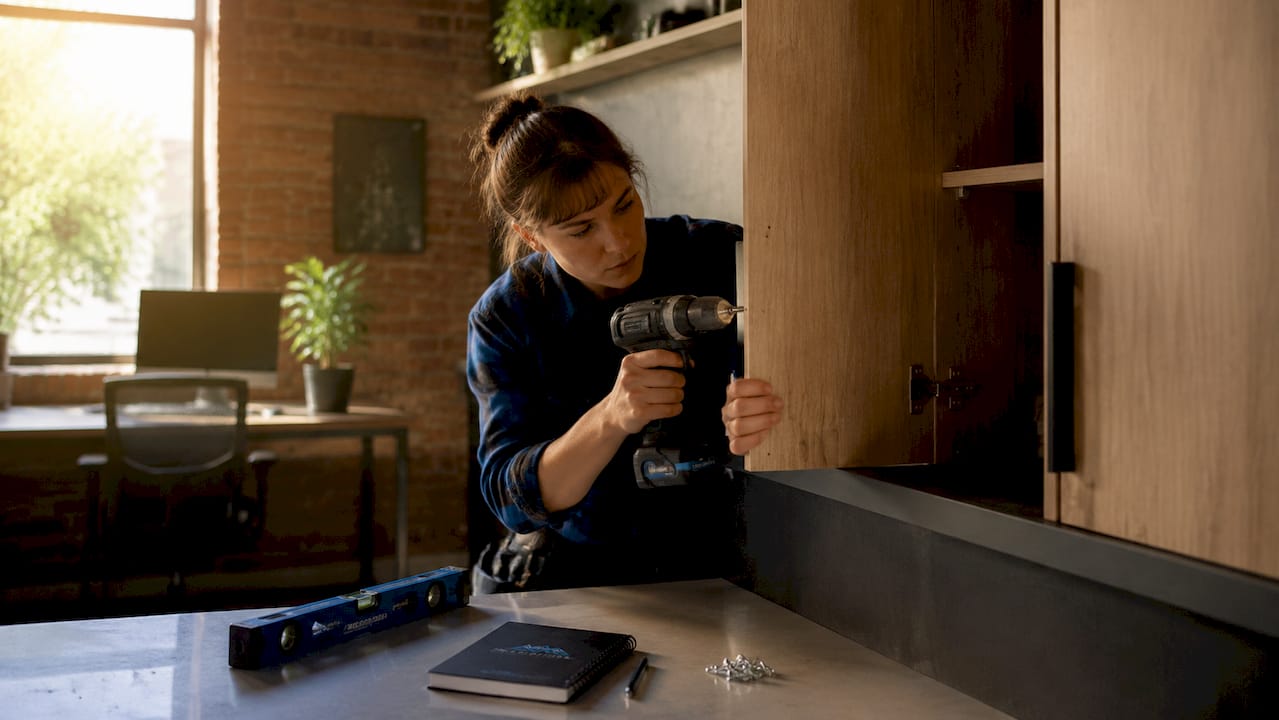
The clearest way to see this difference is in cabinetry. Standard cabinets come in fixed 3-inch increments, which means installers often need filler panels to close gaps between the cabinet and the wall. Those fillers are a visual compromise and a waste of usable space. Custom cabinetry fills every inch of the available run because it is built to the actual measurement of your room.
The difference also shows up in joinery and material quality. Custom carpenters select wood species, grain patterns, and finishes that match your existing home. They use joinery methods built for longevity. Standard products use whatever material keeps the factory price competitive.
| Feature | Custom Carpentry | Standard Cabinetry |
|---|---|---|
| Sizing | Built to exact room dimensions | Fixed increments (3-inch steps) |
| Fit | No filler panels needed | Often requires fillers or gaps |
| Materials | Homeowner-selected species and finish | Factory-standard options |
| Joinery | Artisan techniques for durability | Staple and dowel construction |
| Design flexibility | Fully personalized | Limited style and color choices |
| Cost | Higher upfront investment | Lower upfront cost |
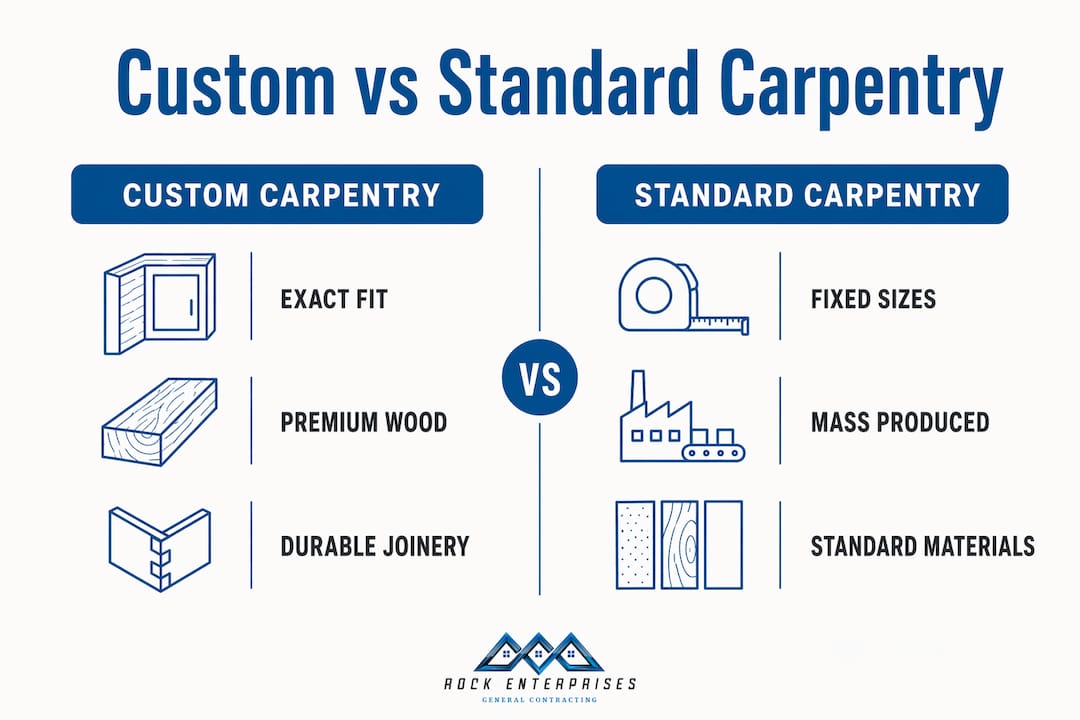
The tradeoff is cost and lead time. Custom work costs more and takes longer than buying off the shelf. For homeowners with irregular rooms, older homes, or specific design goals, that investment pays off in fit, function, and appearance.
What does the custom carpentry process look like from start to finish?
Custom carpentry specialists work as artisans bridging interior design vision and structural reality, focusing on detail-oriented craftsmanship rather than general construction. That means the process is more involved than ordering a cabinet online. Here is what a typical project looks like from the first conversation to the final nail.
- Initial consultation. You discuss your vision, functional needs, and budget with the carpenter. This is where project scope gets defined.
- On-site measurement. The carpenter takes precise measurements of your space, noting any irregularities like out-of-plumb walls or uneven floors.
- Design and material selection. The carpenter produces sketches, shop drawings, or 3D renderings for your approval. You choose wood species, stain, paint, and hardware.
- Fabrication. The carpenter builds the pieces in a shop using a combination of traditional joinery and modern precision tools.
- Installation. The carpenter fits the finished pieces on-site, scribing and trimming as needed to account for architectural quirks.
- Final review. You walk through the finished work together and address any adjustments before the project closes.
Pro Tip: Get the design drawings approved in writing before fabrication begins. Changes after the shop starts cutting wood cost significantly more than changes on paper.
Successful custom carpentry projects rely on clear communication and detailed planning phases, which directly determines homeowner satisfaction and final quality. The more specific you are about your needs in the consultation, the fewer surprises appear during installation.
What are the real benefits of investing in custom carpentry?
Homeowners often treat custom carpentry as a luxury. For homes with irregular layouts or older construction, it is actually the most practical solution available. A prefab unit placed against a wall that is 2 inches out of plumb will rock, gap, and look wrong no matter how expensive the unit is.
Scribing is the technique custom carpenters use to solve this problem. The carpenter traces the contour of an irregular wall onto the cabinet or molding, then trims to that exact profile. The result is a gap-free fit that no prefab unit can replicate. Older homes in New Jersey, for example, almost always have walls that are not perfectly square, making scribing a standard part of nearly every project.
The benefits go beyond fit:
- Space efficiency. Custom built-ins use every available inch, including awkward corners, alcoves, and under-stair spaces that standard furniture ignores.
- Durability. Artisan joinery techniques outlast factory staple-and-dowel construction by years.
- Craftsmanship details. Coped joints in crown molding accommodate wood movement through seasonal humidity changes, preventing the gaps that mitered joints develop over time.
- Architectural character. Elements like wainscoting, built-in cabinetry, and custom stair details give a home a designed quality that builder-grade finishes never achieve.
- Home value. Finished carpentry details signal quality to buyers and appraisers in ways that paint and fixtures do not.
“Custom carpentry transforms a house from generic builder-grade into a designed, unique space through elements like built-in cabinetry, crown molding, wainscoting, and stair details, all fit to home specs.” — Schlickmann Construction
The durability point deserves emphasis. A coped joint on an inside corner of crown molding holds tight for decades. A mitered joint on the same corner will show a gap within a few heating seasons. That single technique difference separates professional finish carpentry from basic installation.
What are the most popular custom carpentry projects for homeowners?
Custom carpentry transforms homes through elements like built-in cabinetry, crown molding, wainscoting, and stair details, all fitted to home specifications. The most requested projects fall into a few clear categories, each solving a specific problem or adding a specific type of character.
- Built-in shelving and cabinetry. The most functional upgrade available. Built-ins replace freestanding furniture with storage that uses the full height and width of a wall, including spaces standard furniture cannot reach.
- Crown molding and trim work. The fastest way to add architectural weight to a room. Trim and molding at the ceiling, floor, and around doors and windows creates visual structure that plain drywall lacks.
- Wainscoting and wall paneling. Adds texture and formality to dining rooms, hallways, and home offices. It also protects walls in high-traffic areas.
- Fireplace mantels and surrounds. A custom mantel turns a fireplace from a functional box into the focal point of a room.
- Custom closets and mudroom systems. Designed around your actual wardrobe, gear, and daily habits rather than a generic layout.
- Stair components. Treads, balusters, newel posts, and handrails built to match your home’s style make a staircase a design feature rather than a utility path.
Pro Tip: Prioritize projects that solve a daily frustration first. A custom mudroom system or built-in pantry will improve your life every single day. A decorative mantel is beautiful, but storage wins on return on investment.
Each of these projects benefits from the custom woodworking approach that combines traditional joinery with modern precision tools. That combination produces pieces that fit perfectly and hold up over time.
How should homeowners plan and budget for a custom carpentry project?
Planning is where most custom carpentry projects succeed or fail. Homeowners who arrive at the first consultation with a clear sense of their needs, style preferences, and budget get better results than those who leave all decisions to the carpenter.
Here is what to prepare before you start:
- Define the problem you are solving. Are you adding storage, improving aesthetics, or fixing a functional issue? The answer shapes every decision that follows.
- Set a realistic budget range. Custom carpentry costs more than standard options because it requires skilled labor and material selection. Get at least two quotes before committing.
- Vet your carpenter carefully. Ask to see photos of completed projects similar to yours. Check reviews on platforms like Thumbtack or Google. Confirm the contractor is licensed and insured.
- Prepare your space. Clear the work area before installation day. Painters and flooring contractors should finish their work before the carpenter arrives, since trim and molding are installed last.
- Approve every design stage in writing. Sketches, material samples, and shop drawings all need your sign-off before fabrication begins.
How to plan a custom carpentry project at home covers the full preparation process in detail, including how to communicate your vision clearly to a contractor. The planning phase is not overhead. It is the work that makes the installation go smoothly.
Key Takeaways
Custom carpentry delivers superior fit, durability, and design character compared to standard options, making it the practical choice for homeowners with specific spaces, older homes, or high design standards.
| Point | Details |
|---|---|
| Definition | Custom carpentry is woodwork built to exact home dimensions, covering finish carpentry and millwork. |
| Custom vs. standard | Custom cabinets fill every inch; standard cabinets require filler panels due to fixed 3-inch sizing. |
| Scribing technique | Scribing trims pieces to fit irregular walls, a skill essential for older homes with non-square surfaces. |
| Coped joints | Coped inside corners on crown molding outlast mitered joints by accommodating seasonal wood movement. |
| Planning matters | Approving design drawings before fabrication prevents costly changes and keeps projects on schedule. |
What I’ve learned from watching custom carpentry done right and wrong
After working with homeowners across Monmouth and Ocean County on renovation projects, one pattern stands out clearly. Homeowners who invest in custom carpentry for the right reasons get results they talk about for years. Homeowners who choose it simply because it sounds premium often feel the cost was not worth it.
The right reason is fit. Not just physical fit, though that matters enormously in older homes. Fit also means the work matches how you actually live. A client who cooks every day needs custom cabinetry designed around their workflow, not a showroom layout. A family with three kids needs a mudroom system built around their actual gear, not a catalog photo.
The craftsmanship details that separate good work from great work are usually invisible to the untrained eye until something goes wrong. Coped joints on crown molding look identical to mitered joints on installation day. Three winters later, the mitered joints show gaps and the coped joints still look tight. That is the difference between a carpenter who knows the trade and one who knows the basics.
My honest advice: spend more time on the consultation and design phase than feels necessary. The homeowners who push for detailed drawings, material samples, and written approvals before fabrication starts are the ones who end up with exactly what they envisioned. The ones who say “just do what you think looks good” are the ones who ask for changes after the wood is cut.
— ryan
How Rockenterprisecontracting approaches custom carpentry in NJ homes
Rockenterprisecontracting is a licensed, family-owned general contracting company based in Shrewsbury, NJ, with a 5.0-star rating on Thumbtack and a 100% positive feedback score. The owner personally oversees every project, which means the craftsmanship standards stay consistent from the first measurement to the final installation.
Whether you are planning built-in cabinetry, crown molding, wainscoting, or a full kitchen renovation, Rockenterprisecontracting brings the same hands-on approach to every job. Their personalized renovation services cover the full scope of finish carpentry and custom woodwork for homes across Monmouth and Ocean County. If you are ready to move from planning to building, contact Rockenterprisecontracting to schedule a consultation and get a transparent, detailed quote for your project.
FAQ
What is custom carpentry in simple terms?
Custom carpentry is woodwork designed and built specifically for your home’s dimensions and style, including elements like built-in shelving, crown molding, cabinetry, and mantels. It differs from standard woodwork because every piece is made to fit your exact space rather than a factory-standard size.
How does custom carpentry differ from bespoke woodworking?
The terms are used interchangeably in most contexts. Bespoke woodworking typically refers to one-of-a-kind furniture pieces, while custom carpentry more often describes architectural woodwork installed in a home, such as trim, built-ins, and cabinetry.
Why do older homes benefit most from custom carpentry?
Older homes have walls, floors, and ceilings that are rarely perfectly square or level. Custom carpenters use scribing to trim pieces to fit irregular surfaces, producing a gap-free result that prefab units cannot achieve.
What is the most popular custom carpentry project for homeowners?
Built-in shelving and cabinetry are the most requested projects because they solve a storage problem while adding architectural character. Crown molding and trim work are a close second for the design impact they deliver at a relatively accessible cost.
How much does custom carpentry cost compared to standard options?
Custom carpentry carries a higher upfront cost than standard cabinetry or off-the-shelf trim because it requires skilled labor, material selection, and fabrication time. The exact cost varies by project scope, materials, and region. Getting two to three quotes from licensed carpenters gives you an accurate range for your specific project.
Recommended
- How to Plan a Custom Carpentry Project at Home
- Finish Carpentry – Rock Enterprises | General Contractor Shrewsbury NJ
- Why Finish Carpentry Differs from Rough Carpentry
- Building Your Dream Home: The Custom Home Construction Journey with Rock Enterprises – Rock Enterprises | General Contractor Shrewsbury NJ