
TL;DR:
- Bathroom renovation timelines depend on scope, material lead times, permits, and trade sequencing, which can extend the schedule from three weeks to over twelve. Proper upfront planning of selections, early ordering of long-lead items, and understanding local permitting requirements help manage delays and ensure timely completion. Coordinating sequential trades and respecting cure times for materials are critical for maintaining project quality and schedule reliability.
Bathroom renovation duration is defined by five core variables: project scope, hidden site conditions, material lead times, permit processing, and trade sequencing. Each one adds time independently. When two or three stack together, a project that looks like a three-week job on paper can stretch to twelve weeks or more. Understanding why bathroom renovation timeline varies before you break ground is the difference between a manageable project and a frustrating one. Rockenterprisecontracting has seen every combination of these delays across Monmouth and Ocean County, and the patterns are consistent enough to plan around.
Why bathroom renovation timeline varies: scope and site conditions
Project scope is the first and most powerful driver of bathroom renovation duration. A cosmetic refresh, new fixtures, fresh paint, and updated hardware, can wrap up in one to two weeks. A full gut remodel that moves plumbing, adds a double vanity, and installs a custom tile shower is a different category entirely.
The less obvious factor is what you find after demolition. Hidden water damage and outdated plumbing surface only after walls come down, and they force scope changes that no one budgeted for in time or money. Older homes in New Jersey are especially prone to this. Knob-and-tube wiring, cast iron drain lines, and subfloor rot are common discoveries that add days or weeks to a schedule.
Mid-project scope changes compound the problem. When a homeowner decides to add a heated floor or extend the shower after demo has started, every trade downstream shifts. The plumber reschedules, the electrician adds a circuit, and the tile order changes.
- Cosmetic update (paint, fixtures, mirror): 1–2 weeks
- Partial remodel (new vanity, toilet, flooring): 2–4 weeks
- Full gut remodel (layout changes, new plumbing, custom tile): 6–12+ weeks
- Structural changes (wall removal, window relocation): add 2–4 weeks on top of any category above
Pro Tip: Walk through your bathroom with your contractor before finalizing the scope. Ask specifically about the age of your plumbing stack and subfloor condition. Knowing these details upfront prevents the most common mid-project surprises.
How do material lead times affect the renovation schedule?
Material procurement is the most underestimated factor in bathroom remodel planning. Most homeowners assume materials arrive within a week of ordering. The reality is more complicated.

Lead time includes manufacturing, shipping, receiving, and inspection for damage, making timing unpredictable even when a product appears available online. A custom vanity can take four to eight weeks. Specialty imported tile can take three to six weeks. Frameless shower glass is measured only after tile and grout are complete, then fabricated and delivered, adding another two to three weeks to that phase alone.
The table below shows realistic lead time ranges for common bathroom components:
| Material | Typical Lead Time | Notes |
|---|---|---|
| Custom vanity | 4–8 weeks | Factory order; no substitutions |
| Specialty or imported tile | 3–6 weeks | Subject to backorder |
| Frameless shower glass | 2–3 weeks after tile | Measured post-tile completion |
| Plumbing fixtures (special order) | 2–5 weeks | Standard fixtures ship faster |
| Stone or quartz countertop | 2–4 weeks after template | Template cut after vanity install |
The ordering sequence matters as much as the lead times themselves. Early procurement of long-lead items before demolition starts is the single best way to prevent idle contractor time. If tile arrives the week demo finishes, work flows continuously. If it arrives three weeks after demo, you pay for a contractor who has nothing to do.
- Finalize all material selections before signing the construction contract.
- Place orders for custom vanities and specialty tile immediately after selections are locked.
- Confirm delivery windows in writing with suppliers.
- Identify backup options for every long-lead item in case of backorder.
- Schedule frameless glass measurement as soon as grout is cured.
Pro Tip: Ask your supplier for the actual ship date, not the estimated availability date. Those two numbers are often weeks apart, and the gap is where projects stall.
What role do permits and inspections play in renovation timing?
Permits add mandatory waiting time to nearly every bathroom renovation that involves plumbing, electrical, or structural work. Permit processing typically takes 2–4 weeks from application to approval. That window sits before a single tool touches the bathroom.
Inspections create a second layer of delay. Work pauses between trades while waiting for an inspector to sign off. In many New Jersey municipalities, rough plumbing and rough electrical each require separate inspections before walls can close. If the inspector is unavailable for two days, the project sits idle for two days.
- Permit application to approval: 2–4 weeks (varies by municipality)
- Rough plumbing inspection: required before wall closure
- Rough electrical inspection: required before wall closure
- Waterproofing inspection: required in some jurisdictions before tile
- Final inspection: required before certificate of occupancy or project close
Jurisdictional differences matter significantly. A bathroom remodel in one Monmouth County town may require three inspections. A neighboring town may require five. Contractors who work regularly in a specific area know these local requirements and can build them into the schedule accurately. Contractors unfamiliar with local codes often underestimate inspection counts, which pushes the finish date back.
The practical takeaway is to treat permit and inspection time as non-negotiable schedule items. They are not delays in the traditional sense. They are required steps that belong in the original timeline estimate.
How does trade sequencing drive bathroom renovation duration?
Trade sequencing is the most technical reason why renovation project timeframes extend beyond what homeowners expect. Each trade depends on the previous one finishing correctly before starting.
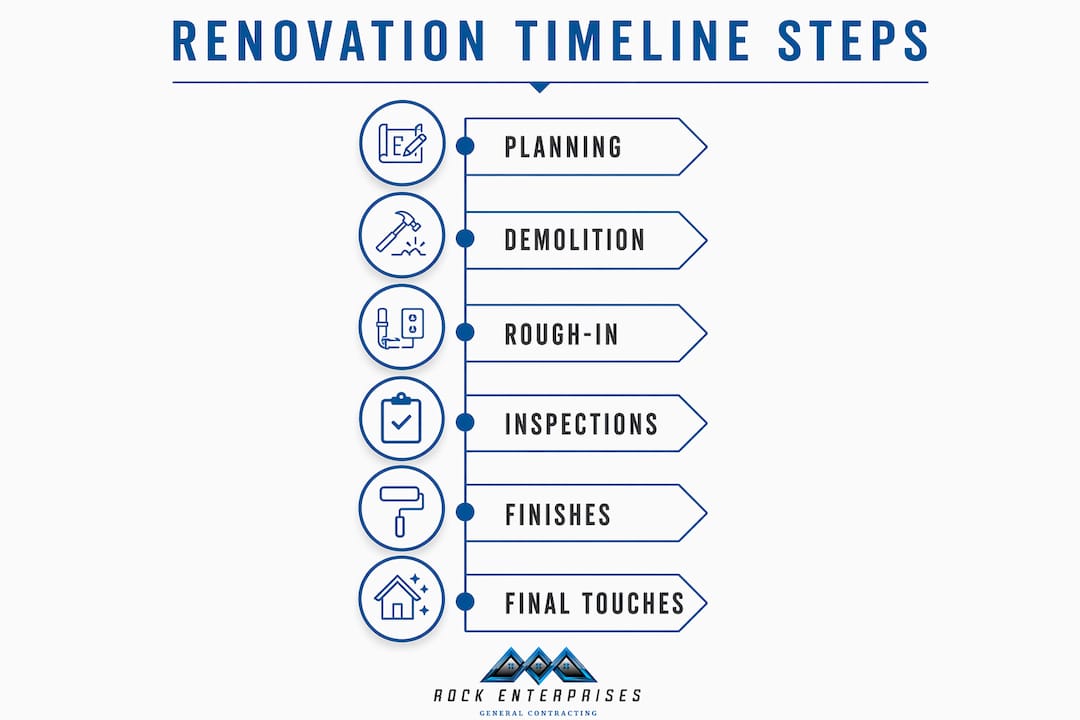
The standard sequence in a bathroom gut remodel runs: demolition, rough plumbing, rough electrical, framing, inspections, waterproofing, tile, vanity installation, countertop templating, fixture trim-out, glass installation, and final finishes. Missing any step or rushing a cure time creates rework that costs more time than the original wait would have.
| Phase | Depends On | Minimum Wait |
|---|---|---|
| Waterproofing coat 2 | Coat 1 application | 4–12 hours |
| Tile installation | Waterproofing final cure | 12–24 hours |
| Grout | Tile set | 24 hours |
| Countertop template | Vanity installed and level | Same day possible |
| Shower glass measurement | Tile and grout complete | Same day possible |
| Shower glass installation | Fabrication after measurement | 2–3 weeks |
Waterproofing is the phase most often rushed and most costly when it fails. Multiple coats with 4–12 hours between applications and a final cure of 12–24 hours before tile are non-negotiable. Environmental conditions like humidity and temperature can extend those windows further.
Measurement-dependent steps like frameless shower glass installation require tile and grout completion first. Missing that gate can add one to two weeks of idle time while fabrication catches up. The same logic applies to countertop templating, which cannot happen until the vanity is installed and perfectly level.
Pro Tip: Ask your contractor to map out every measurement gate before the project starts. Knowing exactly when glass can be measured and when the countertop template gets cut lets you pre-schedule those appointments and avoid waiting for the next available slot.
How can homeowners manage bathroom renovation timeline expectations?
Managing expectations starts with understanding the difference between active construction time and total elapsed project time. Active work on a full remodel typically runs 3–6 weeks. Total elapsed time including planning, ordering, permits, and inspections commonly reaches 6–12 weeks or more. Both numbers are real. Neither one is wrong.
The homeowners who finish closest to their original target date share a few consistent habits:
- Lock all selections before demo. Every change after demolition starts costs time and often money.
- Order long-lead items immediately. Custom vanities and specialty tile ordered on day one of planning arrive ready when construction needs them.
- Build permit and inspection buffers into the schedule. Add 2–4 weeks for permit approval and one to two days per inspection to the baseline timeline.
- Communicate changes through your contractor. Scope changes communicated directly to individual trades create scheduling conflicts. Route everything through one point of contact.
- Budget contingency time. A 10–15% time buffer on top of the estimated schedule absorbs the most common surprises without derailing the project.
Understanding subcontractor scheduling also helps. Trades like plumbers and electricians work across multiple projects simultaneously. A one-day inspection delay on your project may push their next available slot by three days. That reality is not a contractor failure. It is the normal rhythm of trade scheduling, and it belongs in your expectations from day one.
Key Takeaways
Bathroom renovation duration is controlled by scope, materials, permits, and trade sequencing, and managing all four from the start is the only reliable way to finish on time.
| Point | Details |
|---|---|
| Scope drives the baseline | Cosmetic updates take 1–2 weeks; full gut remodels with layout changes take 6–12+ weeks. |
| Material lead times create bottlenecks | Order custom vanities and specialty tile before demolition starts to prevent idle contractor time. |
| Permits add 2–4 weeks minimum | Factor permit approval and multiple inspections into the schedule before construction begins. |
| Trade sequencing is non-negotiable | Waterproofing, tile, and glass installation each depend on the previous phase completing correctly. |
| Active vs. elapsed time differ | 3–6 weeks of active work typically sits inside a 6–12+ week total project window. |
What I have learned from managing bathroom renovation schedules
The biggest misconception I see from homeowners is treating the construction start date as the project start date. By the time demo begins, the project should already be four to six weeks into its timeline. Selections finalized, materials ordered, permits submitted. If that groundwork is not done, the construction phase will stall waiting for the planning phase to catch up.
The second thing I have learned is that rushing waterproofing is the most expensive shortcut in bathroom renovation. I have seen contractors skip the full cure window to keep a tile crew on schedule. The result is moisture intrusion behind tile, mold, and a full tear-out six months later. The 12–24 hour cure window is not a suggestion. It is the minimum, and humidity in a New Jersey bathroom can push it longer.
Early comprehensive planning is not just about saving time. It is about protecting the quality of the finished product. A bathroom built on a rushed schedule carries hidden risks that show up after the contractor is gone. The homeowners I work with who invest in thorough upfront planning consistently report higher satisfaction with the final result, not just the timeline.
— ryan
Rockenterprisecontracting: bathroom renovation planning and scheduling
Managing a bathroom renovation timeline well requires more than a good contractor. It requires a contractor who plans procurement, permits, and trade sequencing before the first wall comes down.

Rockenterprisecontracting handles personalized renovation services for homeowners across Monmouth and Ocean County, with the owner personally overseeing every project. The team coordinates material ordering, permit submissions, and trade scheduling from day one to minimize idle time and keep projects moving. With a 5.0-star rating on Thumbtack and a 100% positive feedback score, Rockenterprisecontracting brings the kind of hands-on project management that turns a complicated renovation into a predictable one. Reach out to discuss your bathroom project and get a realistic timeline built around your specific scope and selections.
FAQ
How long does a full bathroom remodel take?
A full bathroom gut remodel typically takes 6–12 weeks total from planning through completion. Active construction runs 3–6 weeks, with the remainder covering permits, material delivery, and inspections.
What causes the most common delays in bathroom renovation?
Trade interdependencies and material lead times cause the most frequent delays. Waiting for permits, inspector availability, and cure times between phases also add days that most homeowners do not anticipate.
When should I order bathroom materials?
Order all long-lead materials, including custom vanities, specialty tile, and special-order fixtures, immediately after finalizing selections and before demolition starts. This prevents the most common source of idle contractor time.
Do all bathroom renovations require permits?
Any work involving plumbing, electrical, or structural changes requires a permit in most New Jersey municipalities. Purely cosmetic updates like painting or replacing a mirror typically do not.
Why does frameless shower glass take so long?
Frameless shower glass cannot be measured until tile and grout are fully complete. After measurement, fabrication and delivery add another 2–3 weeks, making it one of the longest sequential waits in the renovation schedule.