
TL;DR:
- A personalized renovation strategy tailors every aspect of a remodel to fit your unique needs and preferences. It involves defining goals, tracking a detailed budget, creating an accurate floor plan, selecting materials carefully, and planning the project in phases. Clear priorities, disciplined planning, and effective communication with contractors help prevent delays and budget overruns.
A personalized renovation strategy is the process of tailoring every aspect of your remodel, from budgeting and spatial layout to material choices and scheduling, to fit your unique needs, lifestyle, and design preferences. Generic plans fail because no two homes or homeowners are alike. When you customize home improvement project plan details from the start, you protect your budget, reduce delays, and get results that actually match how you live. A structured planning process that includes goal definition and budget setting creates a foundational project scope that prevents vague timelines from derailing your work.
How to customize your home improvement project plan by defining goals first
The single most powerful question you can ask before any renovation is: “Why am I doing this?” Your answer filters every decision that follows. A homeowner renovating a kitchen for resale value will make completely different choices than one renovating it for daily family cooking. Understanding your primary motivation helps you make trade-offs during budget constraints with far less stress.
Once you have your “why,” sort your wishlist into three categories:
- Must-haves: Non-negotiable items that directly solve a functional problem, such as replacing a broken HVAC system or adding a second bathroom.
- Nice-to-haves: Upgrades that improve comfort or style but are not urgent, such as new cabinet hardware or a tile backsplash.
- Dreams: Aspirational items you would add if the budget allows, such as heated floors or a custom built-in bookcase.
This ranking system does two things. It protects your budget when costs run high, and it gives your contractor a clear picture of where to focus effort. Homeowners who skip this step often end up spending money on cosmetic upgrades while structural issues go unaddressed.
Pro Tip: Write your top three renovation goals on paper before you open any design app or browse any product catalog. Seeing them in writing keeps you anchored when you face the inevitable temptation to scope creep.
What should a renovation budget framework include?
A realistic budget is the backbone of any solid home improvement blueprint. The industry standard for a renovation budget spreadsheet uses five core columns: cost category, estimated amount, actual amount, variance, and notes. This structure lets you track spending accuracy in real time rather than discovering overruns at the end.
| Column | Purpose |
|---|---|
| Cost category | Labels each expense (labor, materials, permits) |
| Estimated amount | Your projected cost before work begins |
| Actual amount | What you actually spend |
| Variance | The difference between estimated and actual |
| Notes | Explains surprises, substitutions, or changes |
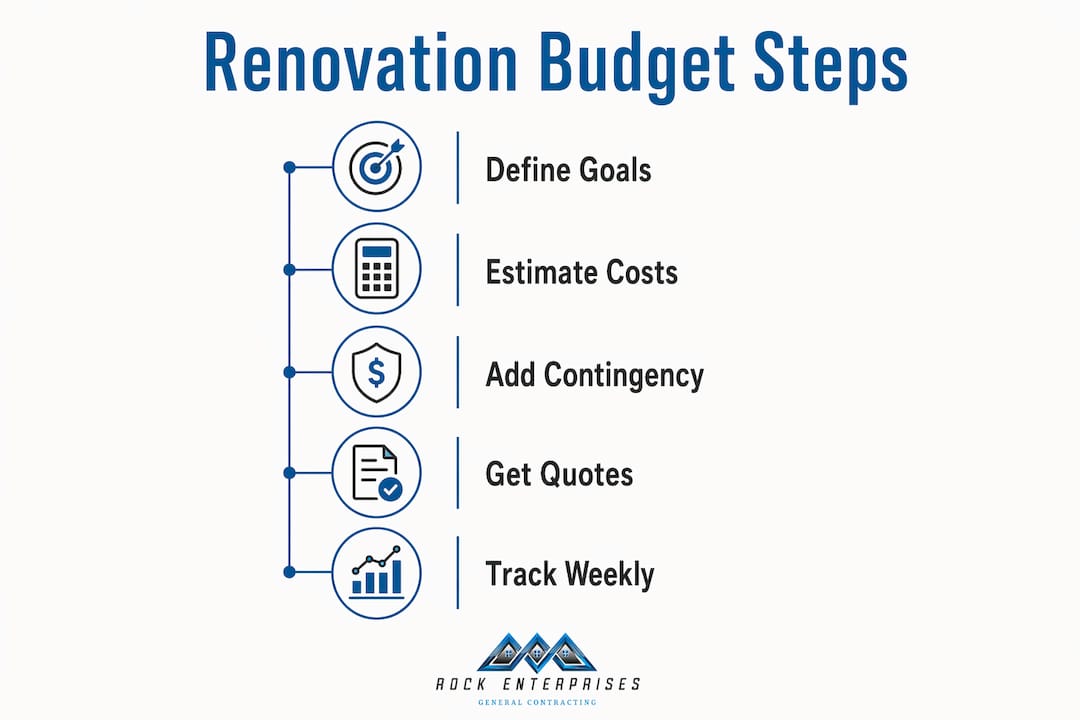
Beyond the spreadsheet, every plan needs a contingency fund. A 10–20% contingency reserve protects you from hidden rot, outdated wiring, or permit delays. That buffer turns a crisis into a manageable line item. Skipping it is the single most common reason renovations stall mid-project.
Gathering at least three contractor quotes before you finalize numbers is also non-negotiable. Three or more bids benchmark local market pricing and prevent you from underestimating costs. A single quote gives you no reference point for whether a price is fair.
Pro Tip: Update your budget spreadsheet every Friday, not just when invoices arrive. Weekly reviews catch small variances before they compound into large overruns.
How do you design a personalized floor plan for your renovation?
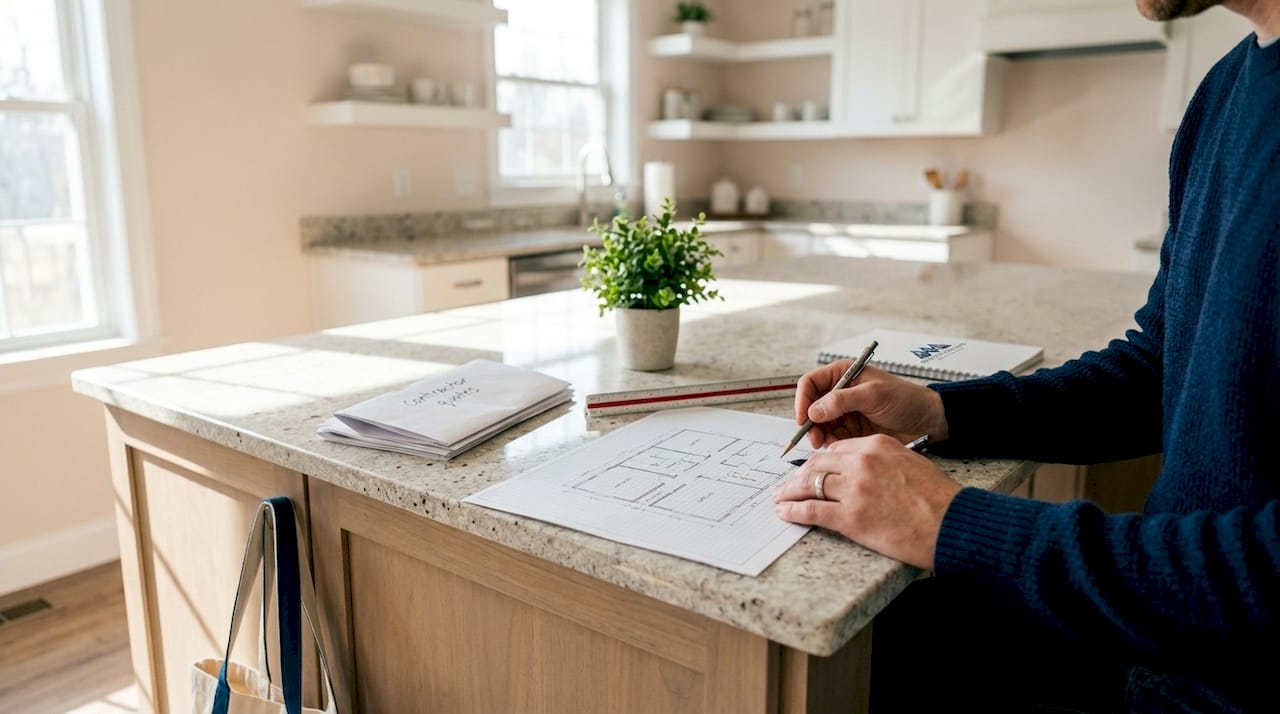
Your floor plan is where your custom project layout becomes real. Getting the measurements right before you sketch a single idea prevents expensive mistakes later. Accurate room measurements and layout documentation prevent guesswork and enable intentional design decisions. Follow these steps to build a layout that fits your lifestyle:
- Measure every wall, door, and window. Record dimensions in feet and inches on a hand-drawn sketch. Note ceiling height, the location of electrical outlets, and any load-bearing walls.
- Photograph the existing space from each corner. Photos capture details that measurements miss, such as how natural light moves through the room at different times of day.
- Sketch three layout options. Do not commit to your first idea. Try one layout that maximizes storage, one that maximizes open space, and one that balances both.
- Map traffic flow. Draw arrows showing how people move through the room during a typical morning. A kitchen where the refrigerator blocks the path to the sink creates daily friction.
- Define functional zones. In a kitchen, separate prep, cooking, and cleanup zones. In a living room, separate seating, media, and reading areas.
- Communicate your layout clearly to your contractor. Homeowners who share clear project dimensions and priorities from the start receive better quotes and smoother workflows.
Free tools like graph paper or basic digital drawing apps work well for this stage. You do not need professional software to produce a clear, usable layout sketch.
How should you select materials and finishes for a custom plan?
Material selection is where your personalized renovation strategy becomes visible. Start with your anchor materials: the countertops, flooring, and cabinetry that define the room’s character. Every other finish should support those anchors rather than compete with them. A white oak floor, for example, pairs naturally with warm-toned cabinet hardware and matte brass fixtures.
Build a complete materials list before you buy anything. Many homeowners budget for the big items and forget the small ones. Trim, grout, outlet covers, and cabinet pulls add up quickly. A detailed list that includes every small item prevents last-minute store runs that break your schedule.
When researching prices, check at least two sources for each material. For choosing remodel materials that balance durability and budget, compare big-box store pricing against local tile and lumber suppliers. Local suppliers often carry better quality at competitive prices for specialty items.
- Phase your purchases. Buy demolition-phase materials first, then rough-in materials, then finish materials. Buying everything at once creates storage problems and ties up cash.
- Organize your shopping list by store section, not by project phase. Grouping items by store layout cuts down on inefficient trips and keeps your schedule tight.
- Keep style coherent. Choose one dominant metal finish (brushed nickel, matte black, or brass) and use it across all fixtures and hardware in the room.
What does a step-by-step execution plan look like?
A well-built execution plan breaks your renovation into 8–12 manageable phases, with each phase designed to be completed in 2–6 hour work sessions. This structure keeps momentum going without burning out your crew or your budget. A renovation timeline guide helps you estimate realistic phase durations before work begins.
- Build your phase list. Write out every task from demolition to final inspection. Group related tasks into phases, such as “rough-in plumbing and electrical” or “tile installation and grouting.”
- Add timeline buffers. Build a 15–20% time buffer into each phase. Inspections get delayed. Materials arrive late. Buffers keep the project moving without panic.
- Sequence your decisions. Prioritize decisions in order: floor plan first, then large fixtures, then finishes, then small details. Making finish choices before the floor plan is set leads to costly reversals.
- Create a decision log. A detailed decision log that records each choice, the rationale behind it, and the date it was made prevents disputes and helps you recall why you made a specific call three months into the project.
- Set a communication plan with your contractor. Agree on a weekly check-in format before work starts. Homeowners who communicate priorities clearly from day one experience fewer misunderstandings and faster resolution when issues arise.
Pro Tip: Treat your decision log like a project journal. Note not just what you decided, but what alternatives you considered and why you ruled them out. This saves hours of second-guessing later.
Key Takeaways
A successful home improvement blueprint requires defined goals, a tracked budget with a contingency reserve, an accurate floor plan, a complete materials list, and a phased execution schedule with built-in buffers.
| Point | Details |
|---|---|
| Define goals first | Rank must-haves, nice-to-haves, and dreams before touching any budget or layout. |
| Use a five-column budget | Track cost category, estimated, actual, variance, and notes to catch overruns early. |
| Measure before you sketch | Accurate room dimensions and photos prevent layout mistakes that cost money to fix. |
| Phase your material purchases | Buy materials in project order to avoid storage problems and cash flow strain. |
| Log every decision | A dated decision log with rationale prevents contractor disputes and costly reversals. |
Why most renovation plans fail before the first wall comes down
The plans I see go sideways almost always share one trait: the homeowner started with Pinterest boards instead of priorities. They have a clear picture of what they want the space to look like, but no clear picture of why they want it or what they are willing to give up to get there. That gap between vision and structure is where budgets blow up and timelines collapse.
The fix is not complicated, but it requires discipline. Write your goals down before you look at a single product. Build your budget before you fall in love with a countertop. Measure your space before you commit to a layout. These steps feel slow when you are excited to start, but they are the difference between a renovation that finishes on time and one that drags on for months.
Clear communication with your contractor matters just as much as the plan itself. I have watched well-planned projects stall because the homeowner assumed the contractor understood preferences that were never stated. Spell out your priorities in writing. Share your decision log. Ask your contractor to confirm understanding before each phase begins. The project management strategies that work in large construction apply directly to residential renovations.
The best renovation plans are not rigid. They are detailed enough to guide every decision and flexible enough to absorb surprises. Build both qualities in from the start.
— ryan
How Rockenterprisecontracting brings your custom plan to life
Rockenterprisecontracting works with homeowners across Monmouth and Ocean County, NJ, to turn detailed renovation plans into finished spaces that function better and look exactly right. The team handles everything from kitchen remodeling and bathroom renovations to expert tile work, with the owner personally overseeing every project.

Every project starts with a transparent conversation about your goals, budget, and timeline. Rockenterprisecontracting’s personalized renovation services are built around the same planning principles covered here: clear scope, phased execution, and honest pricing. Their 5.0-star rating on Thumbtack and 100% positive feedback score reflect what happens when a contractor treats your plan with the same care you put into building it. Browse the portfolio and service pages to see completed projects and find the right fit for your home.
FAQ
What does it mean to customize a home improvement project plan?
Customizing a home improvement project plan means tailoring every element of your renovation, including goals, budget, layout, materials, and schedule, to fit your specific home and lifestyle rather than following a generic template.
How much contingency budget should I set aside for renovations?
Set aside 10–20% of your total renovation budget as a contingency fund to cover hidden damages, permit delays, or unexpected material costs.
How many contractor quotes do I need before starting a renovation?
Get at least three quotes to benchmark local market pricing and avoid underestimating your project costs.
What is the best order to make renovation decisions?
Sequence decisions from largest to smallest: finalize your floor plan first, then choose large fixtures, then select finishes, and handle small details last to avoid costly reversals.
Why does a decision log matter during a renovation?
A decision log records each choice, its rationale, and the date it was made, which prevents contractor disputes and helps you recall specific decisions months into a complex project.