
TL;DR:
- A bathroom remodel involves a structured sequence of planning and construction steps to stay on budget, schedule, and comply with codes. Proper upfront decisions about budget, measurements, permits, and sequencing are essential to prevent costly rework and delays. Engaging licensed professionals for plumbing and electrical work ensures safety, quality, and long-term durability.
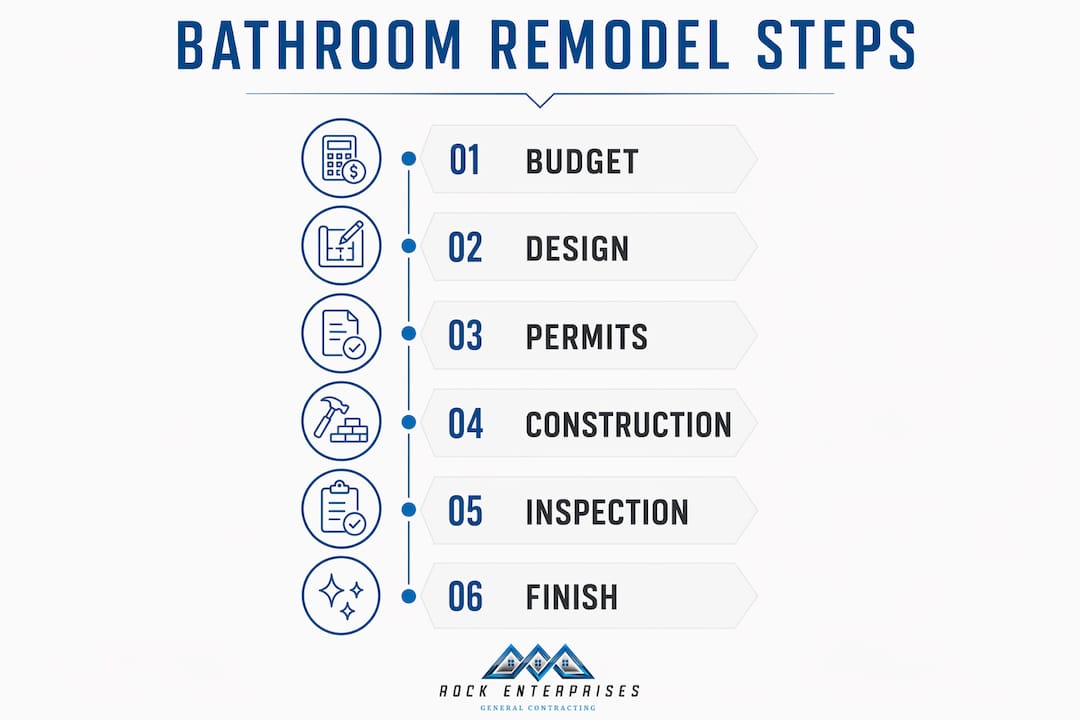
A bathroom remodel is defined as a structured sequence of decisions and construction tasks that, when followed in the right order, keeps your project on budget, on schedule, and code-compliant. To plan bathroom remodel step by step means separating two distinct workflows: the planning order (budget, design, permits) and the build order (demolition, rough-in, inspections, finishes). Skipping steps in either sequence is the single most common cause of costly rework. Tools like the IKEA bathroom planner and code standards like the National Electrical Code give you a framework before a single tile is touched. This guide walks you through every stage.
How to plan a bathroom remodel step by step: start with budget
Your budget is the first decision that controls every decision after it. Budget first, then design is the professional standard, not a suggestion. Setting your number before choosing fixtures prevents the most expensive mistake homeowners make: falling in love with a $900 faucet before knowing whether the plumbing can support it.
A practical bathroom remodel cost guide recommends building in a 10–20% contingency from the start. That buffer covers hidden water damage behind walls, outdated wiring that needs upgrading, and supply delays that push your timeline.
Key budget decisions to lock in before anything else:
- Will you move plumbing fixtures, or keep them in place? Moving a toilet or shower drain adds significant cost.
- Are you replacing the tub, or keeping it and retiling the surround?
- What is your priority: storage, aesthetics, or accessibility features?
- Which items are worth spending more on (tile, shower fixtures) versus where you can save (vanity hardware, mirrors)?
Pro Tip: Spend more on waterproofing and plumbing rough-in. These are hidden once walls close, and failures are expensive to fix. Save on decorative items like towel bars and light fixtures, which are easy to swap later.
Defining your goals at this stage also determines whether you need a licensed contractor or can handle portions yourself. Structural changes, plumbing relocations, and electrical upgrades almost always require licensed trades.
How do you measure and design your bathroom layout?
Accurate measurements are the foundation of a functional bathroom design. Measure all walls, ceiling height, door swings, and window openings before committing to any fixture or layout. A door that swings into the toilet clearance zone or a vanity that blocks a window are problems that show up only after you have already ordered materials.
Follow this sequence for measuring and planning your layout:
- Measure every wall from corner to corner at floor level and again at counter height.
- Record ceiling height and note any soffits or dropped sections.
- Mark door swing direction and the full arc it travels.
- Note window sill height and width, plus any radiators or vents.
- Locate existing drain and supply line positions on your floor plan sketch.
With those numbers in hand, use the IKEA bathroom planner or a free tool like RoomSketcher to test layouts digitally before committing. Moving fixtures on a screen costs nothing. Moving them in the field costs hundreds.
| Design Decision | Why It Matters |
|---|---|
| Fixture placement | Determines plumbing rough-in locations |
| Storage type | Affects wall framing and electrical placement |
| Tile size and pattern | Influences layout lines and grout joint planning |
| Lighting placement | Requires early electrical rough-in coordination |

For style direction, explore bathroom renovation styles before finalizing your design. Choosing a style early prevents mid-project changes that derail your material orders.
Pro Tip: Many tile showrooms and kitchen and bath design centers offer free design consultations. Book one before finalizing your layout. A 30-minute appointment can catch clearance issues that would cost you days of rework.
What permits and inspections does a bathroom remodel require?
Permits are required when you move plumbing, add or relocate electrical circuits, or make structural changes. Cosmetic swaps like replacing a vanity or toilet in the same location typically do not trigger a permit. The moment you relocate a drain, add a circuit, or open a load-bearing wall, you need to pull permits before work begins.
Skipping permits creates real risk. Unpermitted work can void your homeowner’s insurance, create problems when you sell the home, and require you to tear out finished work for a retroactive inspection.
Typical inspection stages for a full bathroom remodel:
- Rough plumbing inspection: Covers new drain lines, supply lines, and vent stack connections before walls close.
- Rough electrical inspection: Covers new circuits, junction boxes, and GFCI outlet placement before drywall.
- Waterproofing inspection: Required in many jurisdictions before tile is set in wet areas.
- Final inspection: Covers completed fixtures, ventilation, and overall code compliance.
Ventilation is one of the most commonly failed inspection points. IRC Section R303.3 requires a minimum 50 CFM intermittent exhaust fan that vents directly to the exterior. Terminating the duct into an attic or soffit is a code violation that will fail your final inspection and require rework.
Electrical code is equally strict. GFCI protection is required on all 125V bathroom receptacles per NEC 210.8(A)(1). If your existing circuits lack GFCI breakers, upgrading them during the remodel is mandatory, not optional.
For a full breakdown of what to include in your contractor agreement and inspection checkpoints, the renovation contracts checklist covers the specifics in detail.
What is the correct order for bathroom construction?
The build order is not flexible. Doing steps out of sequence forces rework, which is the primary driver of budget overruns. The standard sequence starts with demolition, moves to rough-in work, then inspections, then surfaces and finishes.
Here is the correct construction sequence:
- Demolition: Remove existing fixtures, tile, drywall, and flooring down to the subfloor and studs as needed.
- Rough plumbing: Relocate or extend drain lines, supply lines, and vent connections.
- Rough electrical: Run new circuits, install junction boxes, and position exhaust fan wiring.
- Inspections: Schedule rough-in inspections before closing walls. Failing an inspection after drywall is installed means opening the wall again.
- Insulation and backer board: Install cement board or moisture-resistant drywall in wet areas.
- Waterproofing: Apply membrane to shower walls, floor, and curb. Waterproofing failures concentrate at corners, seams, and penetrations. This step requires careful execution, not speed.
- Tile installation: Set floor tile first, then wall tile, working from the most visible areas outward.
- Painting: Complete all painting before fixtures are installed to avoid masking and touch-up work.
- Fixture installation: Set the toilet, vanity, sink, shower fixtures, mirrors, and lighting.
- Hardware and trim: Install towel bars, toilet paper holders, door hardware, and transition strips.
| Phase | Typical Duration |
|---|---|
| Demo and rough-in | 2–4 days |
| Inspections and approvals | 3–7 business days |
| Waterproofing and tile | 4–7 days |
| Fixtures and finishes | 2–3 days |
Remodel timelines typically span 2–3 weeks of active work, but permit approvals and material lead times add buffer. If this is your only bathroom, plan for an alternative during construction.
Pro Tip: Do not let a tile installer rush the waterproofing step. A one-day shortcut on membrane application can result in a leak that destroys the subfloor within two years. Inspect the membrane yourself before tile goes down.
What are the most common bathroom remodel mistakes?
Most remodel problems are predictable. They follow the same patterns on nearly every project where planning was skipped or compressed.
The most frequent mistakes homeowners make:
- Choosing finishes before locking the budget. Tile, fixtures, and vanities selected before the budget is set almost always exceed what the project can support. Lock the number first.
- Closing walls before passing rough-in inspections. This is the most expensive mistake in the build sequence. One failed inspection after drywall means cutting open finished walls.
- Undersizing the exhaust fan. A fan rated for 50 CFM in a 100-square-foot bathroom will not meet IRC ventilation requirements and will fail inspection. Size the fan to the room.
- Skipping GFCI planning. Adding GFCI protection after the electrical rough-in is complete costs more than planning it from the start. Early circuit planning avoids costly rewiring.
- No backup bathroom plan. A remodel that runs two weeks longer than expected is a serious problem if it is your only bathroom.
Pro Tip: Freeze your scope before demolition begins. Every change made after demo starts costs two to three times what it would have cost in the planning phase. Write down exactly what is included and what is not, and treat that list as a contract with yourself.
For a deeper look at what a full bathroom renovation involves from a construction standpoint, the bathroom remodeling overview at Rockenterprisecontracting covers the full scope.
Key takeaways
A successful bathroom remodel depends on separating planning decisions from build decisions and executing both in the correct sequence.
| Point | Details |
|---|---|
| Budget before design | Set your number with a 10–20% contingency before choosing any fixtures or finishes. |
| Measure before planning | Record all wall dimensions, door swings, and drain locations before finalizing your layout. |
| Permits protect you | Pull permits for plumbing, electrical, and structural work to protect your insurance and resale value. |
| Build order prevents rework | Always complete rough-in inspections before closing walls with drywall or backer board. |
| Waterproofing is non-negotiable | Apply membrane carefully at corners and penetrations before tile to prevent long-term leaks. |
What i have learned from watching homeowners plan bathroom remodels
After seeing dozens of bathroom projects go sideways, I can tell you the pattern is almost always the same. The homeowner spent two weeks on Pinterest picking tile and zero time defining a budget. Then demolition starts, a surprise is found behind the wall, and suddenly the project is $4,000 over budget with no contingency left.
The planning order matters more than the build order. You can recover from a sequencing mistake in construction. You cannot recover from a budget that was never realistic to begin with.
The other thing I see consistently: homeowners underestimate how much the permit and inspection process protects them. I know it feels like bureaucracy. But a rough-in inspection is a free second set of eyes on your plumbing and electrical before it disappears behind drywall forever. Use it.
For waterproofing and electrical work, I always recommend bringing in a licensed professional, even on otherwise DIY projects. These are the two areas where a mistake is invisible until it becomes catastrophic. The cost of getting them right the first time is always less than the cost of fixing them later.
— ryan
Let Rockenterprisecontracting handle your bathroom remodel
Planning a bathroom renovation correctly takes time, experience, and knowledge of local codes. Rockenterprisecontracting is a licensed, family-owned general contractor based in Shrewsbury, NJ, serving Monmouth and Ocean County homeowners with a 5.0-star rating on Thumbtack and a 100% positive feedback record.

The owner personally oversees every project, from budget planning and permit coordination to final fixture installation. If you want a team that handles the sequencing, the inspections, and the craftsmanship so you do not have to, explore the full range of expert home renovation services or browse the completed project portfolio to see the quality firsthand. Contact Rockenterprisecontracting today for a transparent quote.
FAQ
What is the first step in planning a bathroom remodel?
Set your total budget before making any design or fixture decisions. Include a 10–20% contingency for surprises found during demolition.
Do i need a permit for a bathroom remodel?
Permits are required when you relocate plumbing, add electrical circuits, or make structural changes. Cosmetic replacements in the same location typically do not require a permit.
What order should bathroom remodel work be done in?
The correct sequence is demolition, rough plumbing and electrical, inspections, waterproofing, tile, painting, and then fixture installation. Never close walls before passing rough-in inspections.
How long does a bathroom remodel take?
Active construction typically takes 2–3 weeks, but permit approvals and material lead times extend the total timeline. Plan for a backup bathroom if this is your only one.
What is GFCI and why does my bathroom need it?
GFCI stands for ground fault circuit interrupter. The NEC requires GFCI protection on all 125V bathroom receptacles to prevent electrical shock near water.