
What does a contractor actually do in outdoor project management?
The contractor is the central coordinator of your outdoor residential project. From the first shovel in the ground to the final walkthrough, they own the schedule, the budget, the quality, and every conversation that keeps the job moving. That single point of accountability is what separates a professionally managed outdoor renovation from a chaotic string of disconnected trades.
Here is what that role covers in practice:
- Overall project coordination: The contractor oversees every phase of the project, from initial planning through construction and final inspection.
- Schedule and budget management: They track timelines, control costs, and flag problems before they become expensive surprises.
- Subcontractor oversight: Masons, electricians, plumbers, and other trades are hired, scheduled, and supervised by the contractor.
- Material procurement: Deliveries are coordinated so crews are never waiting on supplies.
- Homeowner communication: The contractor serves as your primary contact throughout construction, not a rotating cast of trade workers.
- Distinction from designer or landscaper: A designer creates the vision; the contractor executes it. These are separate roles, even when one firm handles both.
Table of Contents
- Key responsibilities that keep your outdoor project on track
- How contractors, designers, and subcontractors work together
- Why contracts and homeowner responsibilities matter more than you think
- Common challenges in outdoor projects and how contractors handle them
- Why hiring a licensed contractor with hands-on oversight matters
- How to evaluate and select the right contractor for your outdoor project
- How good contractors keep you informed throughout the project
- Rockenterprisecontracting: licensed, hands-on outdoor project management in New Jersey
- Key Takeaways
- FAQ
Key responsibilities that keep your outdoor project on track
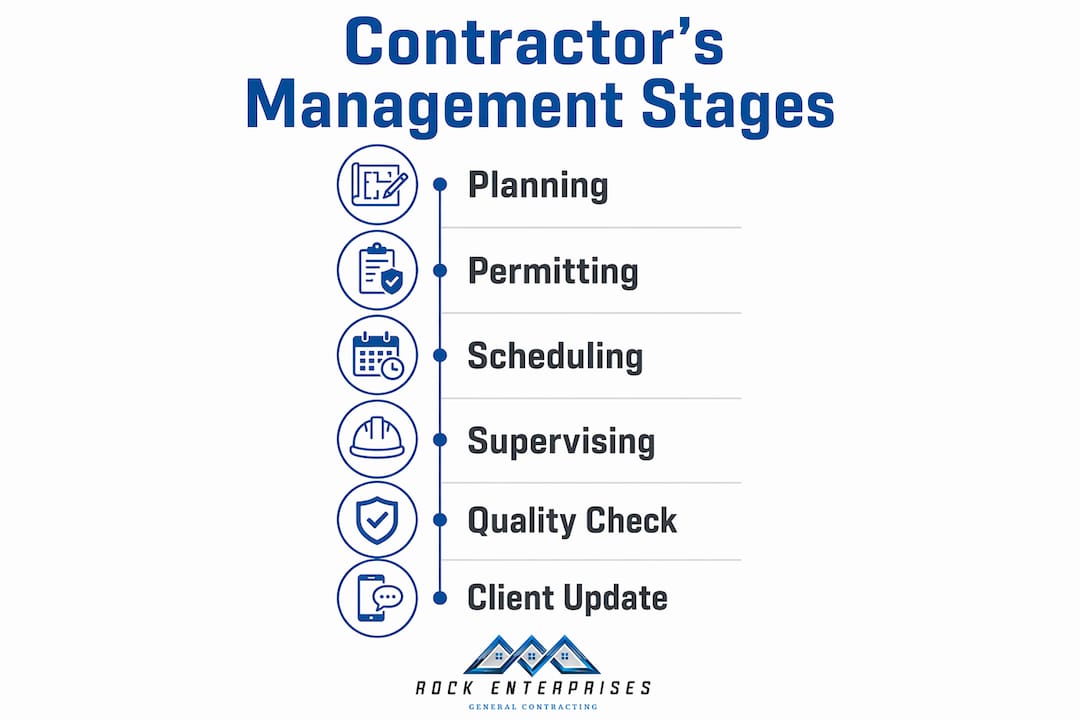
Contractor responsibilities in landscaping and outdoor construction go well beyond swinging a hammer. A licensed general contractor manages the full operational picture.
- Scheduling and timeline management: Work sequences are planned so each trade finishes before the next one starts, preventing costly idle time.
- Budget oversight: The contractor tracks spending against the approved budget and manages change orders before new work begins.
- Subcontractor coordination: Qualified tradespeople are hired, briefed, and supervised to meet design specifications.
- Material logistics: Orders are placed, deliveries are timed, and substitutions are handled when supply issues arise.
- Quality control: Work is inspected against the design drawings at every phase, not just at the end.
- Permits and code compliance: General contractors manage permits and ensure the project meets local building codes, especially when electrical, plumbing, or structural work is involved.
- Safety standards: The job site is organized and maintained to protect workers and your property.
- Daily progress documentation: Contractors log what was completed each day, which creates a clear record if questions arise later.
How contractors, designers, and subcontractors work together
The contractor does not work in isolation. On any outdoor project of real complexity, they sit at the center of a team that includes designers and multiple subcontractors, and keeping that team aligned is one of their most demanding jobs.
Separating design and project management roles improves communication and reduces burnout, leading to better outcomes for the homeowner. Once a design is approved, the contractor takes the plans and translates them into a concrete work schedule, assigning tasks to the right trades in the right sequence.
When something goes wrong mid-project, the contractor steps in. A plant installed in the wrong location, a delayed delivery, a subcontractor running behind schedule: these are the contractor’s problems to solve, not yours. They also act as the communication bridge between the designer’s intent and what actually gets built, making sure the finished space reflects the original vision. For subcontractor coordination specifically, the contractor negotiates scopes, manages contracts, and holds each trade accountable to the project timeline.

Why contracts and homeowner responsibilities matter more than you think
A contract is not just paperwork; it is the document that defines what “done” means before a single tool touches your yard, and it protects both sides when expectations drift.
- Scope and deliverables: Every service is spelled out in writing, so there is no ambiguity about what is included.
- Payment schedules: Milestone payments are defined upfront, with clear terms for late fees and change orders.
- Legal protections: A professional landscaping contract includes limitation of liability, dispute resolution, and indemnification clauses.
- Homeowner utility marking: Before excavation begins, homeowners are required to mark service lines. Liability for unmarked utilities may fall on the homeowner if damage occurs and contractor negligence cannot be proven.
- Site access and preparation: Pets, furniture, hoses, and personal property must be cleared from the work area. The contract typically states the contractor is not liable for items left in the path of work.
- Change order process: Any scope change must be documented and approved before new work starts, protecting both the budget and the timeline.
Pro Tip: Before your project begins, walk the site with your contractor and confirm exactly what you are responsible for clearing, marking, and maintaining. A five-minute conversation upfront prevents a week of delays.
Contractors also document job progress with time-stamped photos when arriving and leaving the site, a standard practice that protects against liability disputes and verifies work completion.
Common challenges in outdoor projects and how contractors handle them
Outdoor construction is unpredictable by nature. Weather, supply chains, and site conditions do not follow a schedule, and how a contractor responds to those disruptions defines the quality of your experience.
- Weather delays: Professional contractors build contingency time into the schedule and communicate proactively when delays are unavoidable.
- Material supply issues: Experienced contractors have supplier relationships that give them access to alternatives when a specified material is backordered.
- Mid-project design changes: Change orders are documented and priced before work proceeds, so scope creep does not quietly inflate your final bill.
- Unexpected site conditions: Buried debris, poor soil, or unmarked utilities can surface during excavation. A prepared contractor identifies these early and presents solutions rather than surprises.
- Subcontractor coordination complexity: When multiple trades overlap, scheduling conflicts happen. The contractor manages sequencing to keep the project moving without one trade blocking another.
- Communication breakdowns: Frequent walkthroughs and written updates keep homeowners informed and reduce the misunderstandings that cause disputes.
Rockenterprisecontracting approaches these challenges with hands-on owner involvement, meaning the person responsible for your project is on site, not managing it remotely from an office.
Why hiring a licensed contractor with hands-on oversight matters
Licensing is not a formality. Licensed contractors carry general liability and workers’ compensation insurance and can provide proof on request, which protects you from financial exposure if a worker is injured or property is damaged during construction.
Beyond legal protection, experienced contractors catch problems that unlicensed operators miss: a drainage grade that will flood your patio, a structural detail that will not pass inspection, a material that looks good in a showroom but fails in your climate. That knowledge comes from years of managing real projects, not from reading a spec sheet.
Rockenterprisecontracting’s hands-on project management reflects exactly this standard. The owner is present, accountable, and invested in the outcome, not delegating oversight to a crew that has never met you.
How to evaluate and select the right contractor for your outdoor project
Choosing a contractor is a decision that shapes every week of your project. These are the criteria that actually matter:
- License and insurance verification: Ask for the contractor’s license number and a certificate of insurance before signing anything. A licensed contractor checklist helps you confirm both.
- Relevant project experience: A contractor who has managed outdoor living projects similar to yours will anticipate problems you have not thought of yet.
- References and reviews: Look for a consistent pattern of satisfied homeowners, not just a handful of five-star reviews.
- Transparent pricing: Detailed, itemized estimates protect you from vague bids that balloon after work starts.
- Communication style: How a contractor communicates during the bid process is how they will communicate during construction.
- Owner involvement: Ask directly whether the owner or a project manager will be on site. The answer tells you a lot about accountability.
How good contractors keep you informed throughout the project
Effective communication is one of the most cited reasons homeowners recommend a contractor to friends. It is also one of the most common failure points when things go wrong.
Professional contractors use a few consistent strategies. They designate a single point of contact so you are never bouncing between trades for answers. They set a regular update cadence, whether daily check-ins by text or weekly walkthrough calls, so you always know where the project stands. Written change orders and progress reports create a paper trail that prevents “I thought that was included” conversations from derailing the final payment.
The best contractors also manage expectations proactively. If a delivery is running late or a weather window is closing, you hear about it before it affects your schedule, not after.
Rockenterprisecontracting: licensed, hands-on outdoor project management in New Jersey
Homeowners in Monmouth and Ocean County who want a contractor that actually shows up, answers questions, and delivers what was promised have a direct option.

Rockenterprisecontracting is a licensed, family-owned general contracting company based in Shrewsbury, NJ. The owner personally oversees every project, which means the person who signed your contract is the same person making decisions on your job site. No hand-offs, no guessing who is in charge. Their 5.0-star rating on Thumbtack and 100% positive feedback score reflect a track record built on transparent pricing and real craftsmanship. You can browse completed renovation projects to see the quality firsthand. Ready to get your outdoor project moving? Contact Rockenterprisecontracting to discuss your project and get a clear, itemized estimate.
Key Takeaways
A contractor’s role in outdoor project management is to serve as the single accountable coordinator for schedule, budget, quality, and communication from start to finish.
| Point | Details |
|---|---|
| Central coordination | The contractor manages every phase, from permits and subcontractors to materials and final walkthrough. |
| Contracts protect both sides | A written contract defines scope, payment milestones, and homeowner obligations before work begins. |
| Licensing and insurance matter | Licensed contractors carry liability and workers’ compensation insurance, protecting homeowners from financial exposure. |
| Communication is a core duty | A single point of contact and regular written updates prevent the disputes that derail outdoor projects. |
| Rockenterprisecontracting | Owner-overseen, licensed contracting in Shrewsbury, NJ, with a 5.0-star Thumbtack rating and 100% positive feedback. |
FAQ
What is the contractor’s main role in outdoor project management?
The contractor acts as the central coordinator, managing the schedule, budget, subcontractors, permits, and homeowner communication from start to finish. They are the single point of accountability for the entire project.
How does a contractor differ from a landscape designer?
A designer creates the plans and visual concept; the contractor executes those plans by managing construction, trades, and logistics. Separating these roles improves communication and leads to better project outcomes.
What should a homeowner do before outdoor construction begins?
Mark all underground utility lines before excavation starts, clear personal property from the work area, and confirm site access terms in writing. Liability for unmarked utilities may fall on the homeowner if damage occurs.
Why does contractor licensing matter for outdoor projects?
Licensed contractors carry general liability and workers’ compensation insurance, meet legal compliance standards, and are accountable to state licensing boards. Unlicensed operators offer none of those protections.
How does Rockenterprisecontracting manage outdoor renovation projects?
Rockenterprisecontracting’s owner personally oversees every project, providing hands-on oversight, transparent pricing, and direct communication throughout construction, backed by strong customer ratings on Thumbtack.