
TL;DR:
- Subcontractors are licensed specialists hired by a general contractor to ensure code-compliant and high-quality trade work during renovations. Homeowners typically contract with the GC, who manages subcontractor scheduling, payments, and legal protections like lien waivers to prevent property claims. Proper management and verification of subcontractors by the GC safeguard project quality, legal compliance, and overall renovation success.
Subcontractors are licensed specialists hired by a general contractor to perform specific trade work within a renovation project. On any kitchen remodel or bathroom overhaul in Monmouth County, the electrician rewiring outlets, the plumber relocating drain lines, and the tile setter finishing the floor are almost certainly subcontractors. The role of subcontractors in renovations is to deliver expert, code-compliant work in their trade while the general contractor coordinates the full project. Understanding how this system works protects your budget, your timeline, and your legal standing as a homeowner.
What responsibilities do subcontractors handle in home renovations?
Subcontractors manage all trade-specific work that falls outside a general contractor’s direct labor. On a typical residential renovation, you will encounter several distinct types, each with a defined scope.
The most common subcontractor trades include:
- Electricians who handle panel upgrades, outlet placement, lighting circuits, and code-required inspections
- Plumbers who manage supply lines, drain relocation, fixture installation, and pressure testing
- HVAC technicians who install or modify heating, ventilation, and air conditioning systems
- Drywall installers who hang, tape, and finish wall surfaces to a paint-ready state
- Tile setters who handle substrate prep, waterproofing, and tile installation in kitchens and bathrooms
- Painters who apply primers, finishes, and specialty coatings to walls, trim, and ceilings
Each subcontractor brings their own crew, tools, and materials. They are also responsible for meeting local building codes and passing the inspections tied to their trade. A licensed electrician, for example, pulls their own permit and schedules the rough-in inspection before walls close. This division of responsibility is what makes complex renovations manageable.
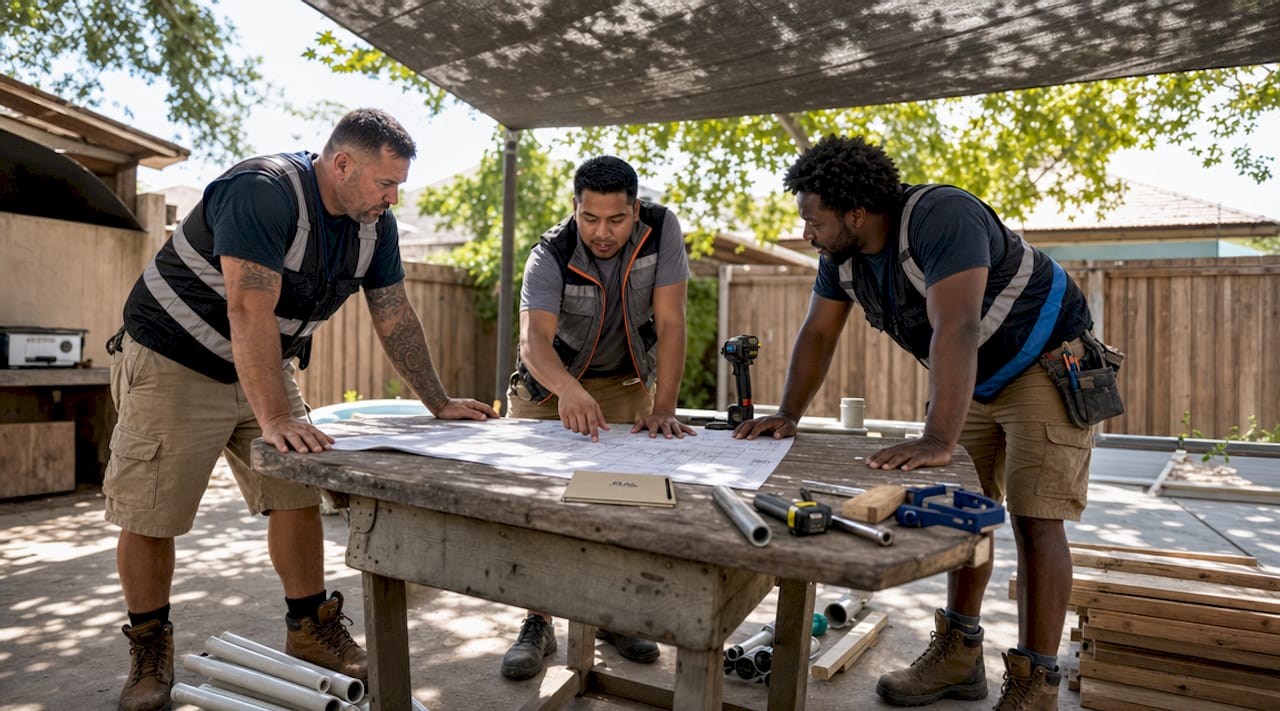
Effective subcontractor oversight includes documented safety meetings, verified insurance certificates, and clearly defined scopes of work. That means your general contractor should have written agreements with each sub before work begins, not verbal handshakes.
Pro Tip: Ask your general contractor for proof of insurance certificates from each subcontractor before work starts. A reputable contractor provides these without hesitation.
How do subcontractors interact with general contractors and homeowners?
The contractual chain in a renovation project is straightforward but often misunderstood. Homeowners rarely have direct contracts with subcontractors. All subs are contracted through the general contractor, who manages scheduling, quality control, and payment. This structure exists for good reason. It keeps one party accountable for the entire project rather than leaving you to coordinate five different specialists simultaneously.
Here is how the communication flow typically works on a well-run renovation:
- You contract with the general contractor. The signed agreement covers the full scope, timeline, and total cost of the project.
- The GC contracts each subcontractor separately. These sub-agreements flow down the obligations from your prime contract, maintaining project-wide compliance.
- The GC schedules and sequences the subs. Plumbing rough-in happens before drywall. Electrical inspection clears before insulation. The GC owns this sequencing.
- Payment flows through the GC. You pay the general contractor, who pays each subcontractor. If you pay a sub directly, you risk double payment or invalidating warranties on their work.
- The GC communicates progress to you. You receive updates from one point of contact, not five separate phone calls from different tradespeople.
Homeowners who try to manage subcontractors themselves create scheduling conflicts and expose themselves to liability issues that a general contractor is specifically trained to prevent. The GC role is not just administrative. It is a legal and logistical buffer that protects you.
Pro Tip: Never pay a subcontractor directly, even if they request it. Always route payment through your general contractor and request a lien waiver at each payment stage to protect your property.
What are the benefits and challenges of hiring subcontractors in renovations?
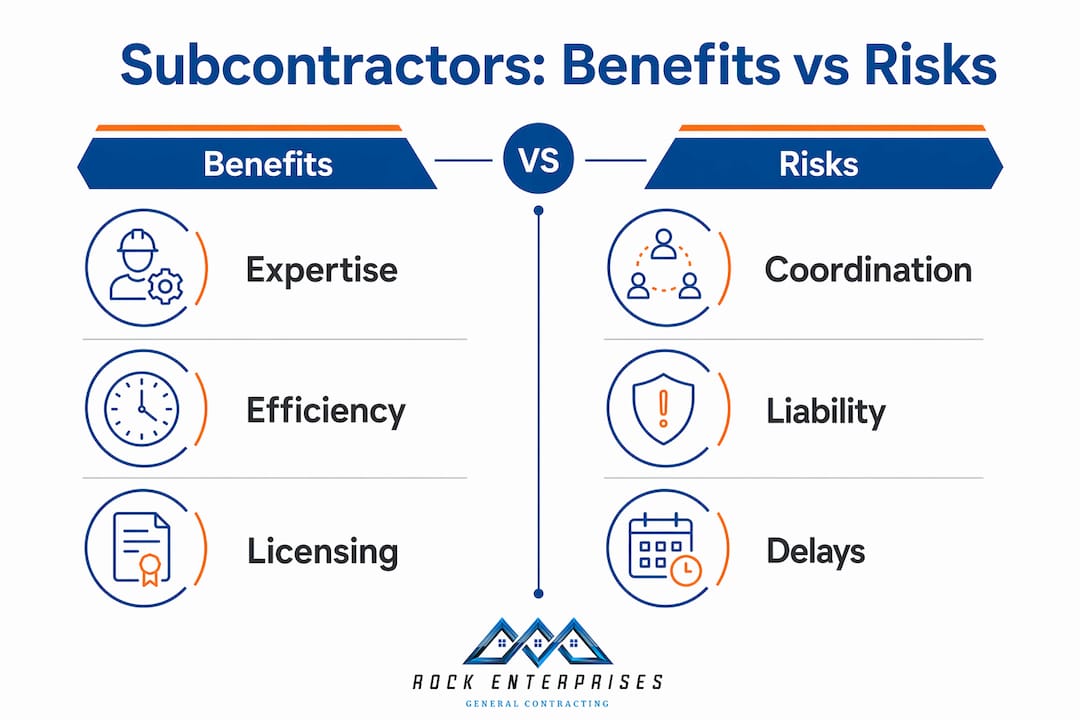
The benefits of hiring subcontractors through a qualified general contractor are significant, but the risks of poor coordination are equally real.
| Factor | Benefit | Risk if Poorly Managed |
|---|---|---|
| Specialized expertise | Licensed tradespeople deliver code-compliant, high-quality work | Unverified subs may cut corners or lack proper licensing |
| Scheduling efficiency | GC sequences trades to minimize downtime | Overlapping or delayed subs cause costly project delays |
| Cost transparency | GC markups of 15 to 25% cover overhead and coordination | Hidden markups or vague contracts obscure true costs |
| Legal compliance | Licensed subs pull permits and pass inspections | Unlicensed work fails inspection and requires costly rework |
| Warranty coverage | Work is warrantied through the GC | Direct sub payments can void warranty protections |
Poor subcontractor coordination causes schedule delays, quality issues, and cost overruns on renovation projects. This is the single most common complaint homeowners have after a renovation goes sideways. The solution is not to avoid subcontractors. It is to hire a general contractor who manages them rigorously.
The benefits of hiring subcontractors through a skilled GC include:
- Access to licensed specialists in every trade without recruiting them yourself
- Faster project completion because experienced subs work efficiently within their scope
- Built-in code compliance since licensed tradespeople know local permit requirements
- Single-point accountability through your general contractor for all trade work
The key takeaway is that subcontractors are not a liability. Poorly managed subcontractors are.
What legal and regulatory considerations should homeowners know?
Subcontractor relationships carry real legal exposure for homeowners who are not paying attention. The most significant risk is the mechanic’s lien. Unpaid subcontractors can place liens on your property, even if you paid your general contractor in full. This happens when a GC collects payment but fails to pay the subs downstream. Lien waivers at each payment stage are your primary defense.
Key legal points every homeowner should know before a renovation begins:
- Verify licensing before work starts. General contractors must ensure subcontractors hold necessary licenses, and failure to comply can result in fines up to $2,000 per violation. Check your state’s contractor licensing database directly.
- Understand California SB 517 if you are in that state. California’s SB 517 requires written disclosure when subcontractors are used, including access to their license numbers and contact information. This 2026 regulation sets a transparency standard other states are likely to follow.
- Request lien waivers at every payment milestone. A conditional lien waiver from each subcontractor at the time of payment, and an unconditional waiver upon project completion, closes the legal loop on your property.
- Confirm insurance coverage. Each subcontractor should carry general liability insurance and workers’ compensation. If a sub is injured on your property without coverage, you may face exposure.
- Review your renovation contract for subcontractor disclosure. A solid contract names the subcontractors involved or at minimum describes the trades being subcontracted. You can review what a thorough contract looks like in this renovation contracts checklist.
These are not edge-case concerns. Mechanic’s liens are one of the most powerful legal tools available to unpaid subcontractors, and they attach directly to your home’s title. Treating lien waivers as optional paperwork is a mistake that costs homeowners thousands of dollars every year.
How can homeowners work effectively with subcontractors during a renovation?
Your primary job as a homeowner is not to manage subcontractors. It is to select a general contractor who does that job well. Once you have the right GC in place, your role shifts to communication, documentation, and informed oversight.
Practical steps that protect your project:
- Vet your general contractor’s subcontractor relationships. Ask how long they have worked with their subs and whether those subs are licensed and insured. A GC who uses the same trusted tradespeople across multiple projects delivers more consistent results than one who hires whoever is available.
- Get the scope in writing for every trade. Your contract should specify what each subcontractor is responsible for, including materials, finishes, and cleanup. Vague scopes lead to disputes over who owes what.
- Stay informed without micromanaging. Schedule weekly check-ins with your GC rather than walking the job site and directing subs yourself. Direct homeowner instructions to subcontractors create confusion and can shift liability.
- Track the schedule against milestones. Know when rough-in inspections are scheduled, when drywall is expected to close, and when final inspections are booked. Delays in one trade cascade into the next.
- Handle disputes through the GC. If a subcontractor’s work does not meet spec, report it to your general contractor in writing. The GC is contractually responsible for correcting deficient work.
For complex renovations involving multiple subcontractors, hiring a professional project manager is worth considering. On a full home renovation with six or more active trades, a dedicated project manager pays for themselves in avoided delays alone.
Pro Tip: Document everything with dated photos at each project phase. If a dispute arises over subcontractor work quality, photographic evidence taken before walls close is often the deciding factor.
You can also review the NJ contractor license guide to understand what verification steps apply specifically to projects in New Jersey.
Key takeaways
The role of subcontractors in renovations is to deliver licensed, trade-specific work under the coordination of a general contractor, protecting homeowners from legal, financial, and quality risks.
| Point | Details |
|---|---|
| Subcontractors work for the GC, not you | All contracts, payments, and instructions flow through your general contractor. |
| Lien waivers are non-negotiable | Request conditional and unconditional lien waivers at every payment stage to protect your property title. |
| Licensing verification is your responsibility | Confirm each subcontractor holds a valid state license before work begins on your home. |
| Poor coordination is the real risk | Subcontractors themselves are not the problem. A GC who manages them poorly is. |
| Specialized expertise improves outcomes | Licensed tradespeople deliver code-compliant work that passes inspection and holds up over time. |
What I’ve learned from watching homeowners navigate subcontractor relationships
Most homeowners walk into a renovation thinking the general contractor is just a middleman they are paying a premium to stand around. That misunderstanding causes more project failures than any single subcontractor issue I have seen. The GC is not a middleman. The GC is the system that makes specialized trade work function as a single, coordinated project.
The homeowners who struggle most are the ones who try to cut costs by hiring subcontractors directly without a GC to oversee them. They save the markup on paper and then spend twice as much correcting sequencing errors, failed inspections, and warranty disputes that no one will honor because there was no prime contract in place. I have seen a bathroom tile job fail a waterproofing inspection because the homeowner hired a tile setter who started work before the plumber finished rough-in. No GC would have allowed that sequence.
The other thing most articles will not tell you is that the subcontractor relationship is where a GC’s reputation is built or destroyed. A contractor who has worked with the same licensed electrician and plumber for ten years delivers a fundamentally different project than one who calls whoever picks up the phone. When you are interviewing general contractors, ask specifically about their subcontractor relationships. Long-term, repeat relationships with the same tradespeople are one of the clearest signals of a contractor worth hiring.
Treat subcontractors as the specialists they are. Respect their expertise, let your GC manage the coordination, and focus your energy on selecting the right general contractor in the first place. That single decision determines more about your renovation outcome than anything else you will do.
— ryan
How Rockenterprisecontracting manages subcontractors on your renovation

Rockenterprisecontracting is a licensed, family-owned general contracting company based in Shrewsbury, NJ, with a 5.0-star rating on Thumbtack and a 100% positive feedback score. Every renovation project is personally overseen by the owner, with licensed and insured subcontractors vetted through long-term working relationships. Homeowners across Monmouth and Ocean County get full transparency on who is working in their home, what each trade is responsible for, and how payments are structured. If you are planning a kitchen remodel, bathroom renovation, or full home update, start by reviewing your renovation contract options to understand exactly what a well-managed subcontractor agreement looks like. You can also explore Rockenterprisecontracting’s full range of expert home renovation services to see how subcontractor coordination works in practice.
FAQ
What is the role of subcontractors in a home renovation?
Subcontractors are licensed trade specialists, such as electricians, plumbers, and tile setters, hired by the general contractor to complete specific portions of a renovation. They deliver the technical expertise required for code-compliant work while the general contractor manages scheduling and overall project quality.
Do homeowners have a contract with subcontractors?
Homeowners typically do not have direct contracts with subcontractors. All subcontractors are contracted through the general contractor, who holds full responsibility for their work, scheduling, and payment.
What happens if a subcontractor is not paid?
An unpaid subcontractor can file a mechanic’s lien against your property, even if you paid your general contractor in full. Requesting lien waivers from each subcontractor at every payment milestone is the standard protection against this risk.
How do I verify a subcontractor’s license?
You can verify subcontractor licensing through your state’s contractor licensing database. In New Jersey, the Division of Consumer Affairs maintains an active registry. Your general contractor is also legally required to confirm that all subs hold valid licenses before work begins.
Should I ever pay a subcontractor directly?
Paying a subcontractor directly risks double payment and can void the warranty on their work. All payments should flow through your general contractor, who then pays each subcontractor and collects the appropriate lien waivers on your behalf.